

Addition Within 20 Worksheets PDF: A Comprehensive Guide
Today, March 6th, 2026, at 1:14 PM, this guide explores addition within 20 worksheets in PDF format, aiding beginners with fundamental arithmetic skills.
What are Addition Within 20 Worksheets?
Addition within 20 worksheets are educational resources designed to help young learners master basic addition facts. These worksheets typically present a series of addition problems where the sum of the two addends does not exceed 20. As of March 6th, 2026, they remain a cornerstone of early math education.
These resources come in various formats, including printable PDFs, online interactive exercises, and even game-based activities. The core purpose is to build fluency and confidence in adding numbers within this crucial range. They often start with simple problems using visual aids like pictures or number lines, gradually progressing to more abstract calculations. Mastering this skill is foundational for more complex mathematical concepts later on, ensuring a solid base for future learning.
Why Use Addition Within 20 Worksheets?
Utilizing addition within 20 worksheets offers numerous benefits for early math learners. On March 6th, 2026, these resources remain vital for building a strong mathematical foundation. They provide focused practice, reinforcing the addition facts necessary for future success.
Worksheets help students develop computational fluency, improving speed and accuracy. They also encourage independent practice and problem-solving skills. The repetitive nature of the exercises aids in memorization, while varied formats keep learners engaged. Furthermore, worksheets allow teachers and parents to easily assess a child’s understanding and identify areas needing further support. They are a cost-effective and readily available tool for supplemental math practice, fostering confidence and a positive attitude towards mathematics.
Benefits of Printable PDF Format
As of March 6th, 2026, the printable PDF format for addition within 20 worksheets offers significant advantages. PDFs ensure consistent formatting across all devices, eliminating display issues. They are easily downloadable and storable, creating a readily accessible resource library.
Printing allows for tangible practice, appealing to kinesthetic learners. PDFs are cost-effective, minimizing paper usage with double-sided printing. They are also ideal for offline use, eliminating the need for internet connectivity. Furthermore, PDFs can be easily shared with students, parents, or colleagues. This format supports flexible learning environments, enabling practice at home, in the classroom, or during travel, fostering independent learning and skill reinforcement.
Types of Addition Within 20 Worksheets
On March 6th, 2026, diverse worksheets exist – simple problems, picture-based exercises, missing addends, word problems, and number line additions – to cater to varied learning styles.
Simple Addition Problems (No Regrouping)
As of March 6th, 2026, these worksheets focus on foundational addition skills, presenting problems where the sum of two numbers within 20 does not exceed nine in the ones place. This eliminates the need for regrouping, allowing students to concentrate solely on combining quantities.
Examples include 5 + 3, 7 + 2, and 9 + 1. The layout typically features horizontal or vertical equations, providing ample space for students to write their answers. These exercises are ideal for introducing the concept of addition and building confidence in basic arithmetic.
Worksheets often include a variety of problems, gradually increasing in difficulty as students progress. Visual aids, such as colorful illustrations or manipulatives, may be incorporated to enhance understanding and engagement. The goal is to establish a strong foundation for more complex addition concepts later on.
Addition with Pictures
Considering today’s date, March 6th, 2026, these worksheets utilize visual representations to help students grasp the concept of addition. Each problem presents a scenario with groups of objects – apples, stars, or balls, for instance – that students must count and combine.
For example, a worksheet might show three apples plus five apples, prompting the student to count all the apples to determine the sum. This approach caters to visual learners and reinforces the idea that addition represents combining quantities.
These worksheets are particularly effective for young learners who are still developing their number sense. They bridge the gap between concrete objects and abstract mathematical symbols, making addition more accessible and engaging. The pictures often feature bright colors and simple designs to maintain student interest.
Missing Addend Problems
As of March 6th, 2026, at 1:14 PM, missing addend worksheets present addition equations with one number absent, challenging students to determine the unknown value. These problems are formatted as “_ + 7 = 12” or “5 + _ = 15”, requiring students to apply their addition knowledge in reverse.
These worksheets encourage critical thinking and problem-solving skills, as students must deduce the missing number to complete the equation. They build upon a solid understanding of addition facts and introduce the foundational concept of algebraic thinking.
Often, these worksheets start with smaller numbers and gradually increase in difficulty, ensuring students build confidence and mastery. They are crucial for developing number sense and preparing students for more complex mathematical operations.
Word Problems (Addition Within 20)
Recorded on March 6th, 2026, at 1:14 PM, word problems within addition worksheets present mathematical concepts in real-life scenarios. These problems require students to extract numerical information from text and determine the appropriate addition operation. Examples include: “Sarah has 8 apples and John gives her 5 more. How many apples does Sarah have now?”
These worksheets bridge the gap between abstract mathematical equations and practical application, fostering a deeper understanding of addition’s relevance. They enhance reading comprehension skills alongside mathematical abilities, demanding careful analysis of the problem’s context.
Effective word problem worksheets gradually increase in complexity, introducing varied vocabulary and multi-step problems to challenge students’ analytical thinking.
Number Line Addition
Documented on March 6th, 2026, at 1:14 PM, number line addition worksheets visually represent addition as a movement along a numerical line. Students begin at the first addend and “jump” forward by the amount of the second addend to find the sum. This method reinforces the concept of addition as increasing quantity.
These worksheets are particularly beneficial for visual learners, providing a concrete representation of the addition process. They aid in understanding the commutative property of addition, demonstrating that the starting point doesn’t affect the final result.
Worksheets often include pre-numbered lines and arrows to guide students, gradually transitioning to independent number line creation as skills develop.

Creating Your Own Addition Within 20 Worksheets
As of March 6th, 2026, 1:14 PM, crafting personalized worksheets allows tailored practice, accommodating individual student needs and reinforcing addition concepts effectively.
Using Online Worksheet Generators
On March 6th, 2026, at 1:14 PM, online worksheet generators represent a convenient and efficient method for educators and parents seeking to create customized addition within 20 practice materials. These platforms typically offer a user-friendly interface, allowing for quick adjustments to parameters like the number of problems, inclusion of images, and formatting options.
Many generators provide options to download worksheets directly as PDF files, ensuring compatibility across various devices and easy printing. Features often include the ability to focus on specific addition skills, such as adding with or without regrouping, or incorporating missing addend problems. Some platforms even allow for the creation of answer keys automatically, saving valuable time. Exploring different generators will reveal varying levels of customization and available features, catering to diverse learning objectives.
Utilizing Microsoft Word or Google Docs
As of March 6th, 2026, at 1:14 PM, Microsoft Word and Google Docs offer viable alternatives for crafting addition within 20 worksheets, providing greater control over design and content. While requiring more manual effort than dedicated generators, these tools allow for complete customization.
Users can easily insert tables to structure problems, utilize equation editors for clear mathematical notation, and incorporate images for visual learners. Both programs support saving documents as PDFs, ensuring broad accessibility. Creating answer keys is also straightforward. Though initially time-consuming, templates can be developed for repeated use, streamlining the process. This method is ideal for educators desiring highly tailored worksheets aligned with specific lesson plans and student needs.
Handwriting Worksheets for Personalized Learning
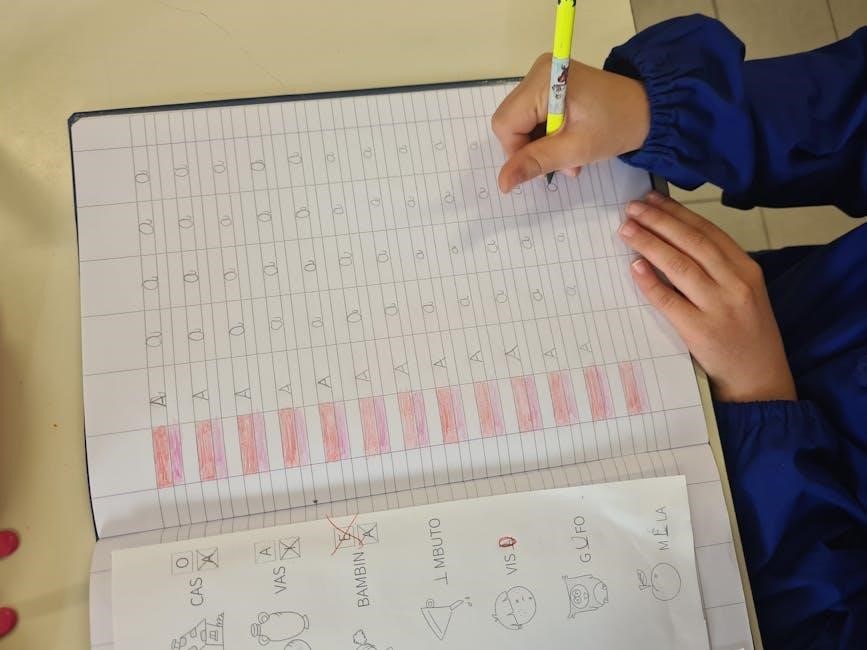
Recorded on March 6th, 2026, at 1:14 PM, handwriting addition worksheets offer a unique benefit – reinforcing fine motor skills alongside mathematical concepts. While less common with readily available PDFs, creating these manually provides a personalized touch. This approach is particularly valuable for younger learners or those needing extra support with handwriting formation.
Educators can tailor the worksheet’s layout and font to suit individual student needs. The act of physically writing the numbers and equations can enhance memory retention and understanding. Though more time-intensive, this method fosters a deeper connection to the material. Consider incorporating colorful designs or themed elements to increase engagement and motivation.

Finding and Downloading Addition Within 20 Worksheets PDF
As of March 6th, 2026, 1:14 PM, numerous online resources provide free and paid addition within 20 worksheets in convenient PDF format for easy access.
Popular Educational Websites Offering Free Worksheets
As of today, March 6th, 2026, at 1:14 PM, several reputable websites consistently offer a wealth of free, printable addition within 20 worksheets in PDF format.
K5 Learning is a standout resource, providing a diverse range of worksheets categorized by skill level and type, including simple addition, missing addends, and word problems. Education.com also boasts an extensive collection, often allowing filtering by grade level and specific addition concepts.
Math-Drills.com is another excellent option, known for its focus on drill-based practice, offering numerous worksheets designed to reinforce addition facts. Furthermore, Common Core Sheets provides worksheets aligned with Common Core standards, ensuring relevance to classroom curricula. These sites generally allow direct PDF downloads, making them incredibly convenient for teachers and parents alike. Always preview the worksheets to ensure they align with your specific learning objectives.
Paid Worksheet Resources and Subscriptions
Considering today’s date, March 6th, 2026, at 1:14 PM, while many free resources exist, paid worksheet subscriptions often provide enhanced features and content for addition within 20 practice.
Teachers Pay Teachers is a popular marketplace where educators share and sell their custom-created worksheets, offering a vast selection and often, differentiated options. IXL provides a comprehensive, subscription-based learning platform with adaptive worksheets and real-time progress tracking.
SplashLearn offers gamified worksheets and a structured learning path, making practice more engaging for young learners. These paid resources frequently include answer keys, detailed progress reports, and the ability to customize worksheets to individual student needs. While requiring an investment, they can save educators valuable time and provide a more tailored learning experience.
Ensuring Worksheet Quality and Accuracy

As of today, March 6th, 2026, at 1:14 PM, when sourcing addition within 20 worksheets in PDF format, prioritizing quality and accuracy is crucial for effective learning. Always review a sample of the worksheets before committing to a resource, whether free or paid.
Check for errors in the problems themselves and the provided answer keys. Look for clear, age-appropriate formatting and avoid worksheets with distracting visuals. Ensure the problems align with the intended learning objectives – focusing on mastery of addition facts within 20.
Reputable educational websites generally maintain higher standards of accuracy. When using user-generated content, exercise caution and verify the information. A small investment in quality resources can prevent misconceptions and build a strong foundation in mathematics.

How to Effectively Use Addition Within 20 Worksheets
On March 6th, 2026, at 1:14 PM, strategically integrate these PDF worksheets, considering age and skill level, to maximize learning and engagement.
Age and Skill Level Considerations
As of March 6th, 2026, 1:14 PM, carefully assess the learner’s developmental stage before introducing addition within 20 worksheets. Typically, these are best suited for kindergarten and first-grade students, around ages 5-7.
Begin with simpler worksheets featuring sums up to 10 for those new to addition. Observe if the child grasps the concept of combining quantities. If they struggle, provide more concrete manipulatives alongside the worksheets.
For students demonstrating proficiency, introduce worksheets with sums up to 20, gradually increasing complexity. Consider their existing number recognition and counting skills. Adjust the pace and difficulty to prevent frustration and foster a positive learning experience. Remember, individualized learning is key!
Incorporating Worksheets into Lesson Plans
On March 6th, 2026, at 1:14 PM, seamlessly integrate addition within 20 worksheets into broader lesson plans. Don’t treat them as isolated activities! Begin with a hands-on activity – using counters or blocks to visually represent addition problems.
Then, transition to worksheets as a practice and reinforcement tool. Use worksheets after introducing a new concept, or as a review before assessments. Connect worksheets to real-world scenarios through word problems.

Vary the worksheet types – pictures, number lines, missing addends – to maintain engagement. Dedicate specific time slots for worksheet completion, and always follow up with a discussion to address any difficulties.
Making Learning Fun: Gamification Techniques
As of March 6th, 2026, at 1:14 PM, transform addition within 20 worksheets into engaging games! Implement a points system – awarding points for correct answers and speed. Introduce timed challenges to add excitement and encourage quick recall.
Create a “math race” where students compete to complete worksheets accurately. Utilize reward charts or small prizes for achieving milestones. Turn worksheets into a scavenger hunt, hiding problems around the room;
Incorporate themes – superheroes, animals, or space – to make learning more relatable. Use online tools to create interactive quizzes based on worksheet content. Remember, the goal is to foster a positive attitude towards math and build confidence!

Differentiation and Adapting Worksheets
On March 6th, 2026, at 1:14 PM, tailoring addition worksheets to individual needs is crucial; adjust difficulty, provide support, or offer challenges for optimal learning.
Worksheets for Struggling Learners
As of March 6th, 2026, 1:14 PM, worksheets designed for students needing extra support should prioritize visual aids. Employing manipulatives – like counters or drawings – alongside problems helps concretize the addition concept. Begin with sums totaling less than 10, gradually increasing complexity;
Focus on one-to-one correspondence and breaking down numbers. For example, 8 + 5 can be visualized as eight objects plus five objects. Reduce the number of problems per worksheet to prevent overwhelm and build confidence.
Color-coding can also be beneficial, highlighting addends or the sum. Provide pre-filled sections where students only need to complete the final step. Remember, the goal is to foster a positive learning experience and build a strong foundation in addition, not to induce frustration.
Challenge Worksheets for Advanced Students
As of March 6th, 2026, at 1:14 PM, challenge worksheets for proficient learners should extend beyond basic addition. Introduce problems with three addends within 20, encouraging mental math strategies. Include missing addend problems requiring students to deduce the unknown number.
Present addition equations in a non-standard format, like 5 + ? = 12, to test conceptual understanding. Incorporate word problems demanding multi-step solutions and critical thinking.
Introduce the concept of fact families, linking addition and subtraction. Time-based challenges can add an element of excitement and encourage speed and accuracy. Worksheets could also feature patterns or sequences involving addition. The aim is to stimulate their mathematical reasoning and prepare them for more complex operations.
Adjusting Difficulty Levels
Considering today’s date, March 6th, 2026, at 1:14 PM, adjusting difficulty is crucial for effective learning. Start with simple addition within 10, using visual aids like pictures. Gradually increase the numbers to 20, removing supports as proficiency grows.
For beginners, focus on adding 1 or 2 to a given number. Introduce number lines to visualize the addition process. Reduce the number of problems per worksheet to prevent overwhelm.
To increase difficulty, incorporate missing addend problems or word problems. Introduce two-digit addition without regrouping. Regularly assess student understanding and tailor worksheets accordingly, ensuring a challenging yet achievable learning experience. Remember, personalized learning is key to success.
Assessment and Tracking Progress
On March 6th, 2026, at 1:14 PM, worksheets reveal skill mastery. Track errors to pinpoint weaknesses, and monitor improvement over time for effective learning.
Using Worksheets as a Formative Assessment Tool
As of March 6th, 2026, 1:14 PM, addition within 20 worksheets serve as excellent formative assessment tools. They provide immediate feedback on student understanding during the learning process, unlike summative assessments which occur afterward.
Observe where students consistently struggle – are they miscounting, reversing numbers, or having difficulty with specific addends? This insight allows for targeted intervention. Don’t simply grade the worksheet; analyze the types of errors.
Use the results to adjust future lessons, re-teach concepts, or provide individualized support. Worksheets highlight gaps in knowledge before they become larger problems. This proactive approach fosters a more effective and personalized learning experience, ensuring all students grasp foundational addition skills.
Identifying Areas for Improvement
Recorded on March 6th, 2026, at 1:14 PM, analyzing addition within 20 worksheets reveals specific areas needing improvement. Common errors include confusion with number order, difficulty recognizing number combinations that equal ten, and struggles with the concept of “making ten” to simplify addition.
Look for patterns: does a student consistently struggle with adding 9 to any number? This indicates a need for focused practice. Are they relying on counting fingers instead of recalling facts?
Worksheet analysis pinpoints these weaknesses, allowing educators to tailor instruction. Targeted practice, utilizing manipulatives or visual aids, can address these specific challenges, fostering a stronger foundation in addition skills and building confidence.
Tracking Student Performance Over Time
As of March 6th, 2026, at 1:14 PM, consistent tracking of student performance on addition within 20 worksheets is crucial for gauging progress. Implement a simple system – a spreadsheet or dedicated tracking tool – to record scores and completion times for each worksheet.
Note not just accuracy, but also speed. A student consistently answering correctly but slowly may need strategies for fluency. Look for trends: are scores improving steadily, plateauing, or declining?
Regularly reviewing this data allows for timely intervention and adjustments to instruction. Visual representations, like graphs, can clearly illustrate growth and highlight areas needing continued focus, ensuring effective learning.
Tips for Parents and Educators
On March 6th, 2026, at 1:14 PM, foster a positive learning environment, offer consistent encouragement, and actively monitor understanding when using addition worksheets.
Creating a Positive Learning Environment
As of March 6th, 2026, 1:14 PM, establishing a supportive atmosphere is crucial when utilizing addition within 20 worksheets. Minimize distractions and create a dedicated learning space. Encourage a growth mindset, emphasizing effort over innate ability. Celebrate small victories and focus on progress, not just perfect answers.
Avoid pressure or criticism, as this can hinder a child’s confidence. Frame mistakes as learning opportunities. Make the learning process interactive and engaging, perhaps by turning worksheet practice into a friendly competition or game. Positive reinforcement, like verbal praise or small rewards, can significantly boost motivation. Remember, a relaxed and encouraging environment fosters a love for learning mathematics.
Providing Encouragement and Support
Recorded on March 6th, 2026, at 1:14 PM, consistent encouragement is vital when children work with addition within 20 worksheets. Offer specific praise, highlighting their effort and strategies, not just correct answers. “I noticed you used the number line effectively!” is more impactful than “Good job!”.
Be patient and supportive, especially when they encounter challenges. Break down problems into smaller, manageable steps. Offer gentle guidance rather than providing solutions directly. Acknowledge their frustration and validate their feelings. Remind them that learning takes time and practice. Celebrate their persistence and willingness to try, fostering a positive attitude towards mathematics and building their self-confidence.
Monitoring Student Understanding
As of March 6th, 2026, at 1:14 PM, actively observe students while they complete addition within 20 worksheets. Look beyond just the final answer; assess their process. Are they using fingers, drawing pictures, or employing number lines? Identify any consistent errors – do they struggle with regrouping, or miscount?
Ask probing questions: “Can you explain how you solved this?” or “What strategy did you use?”. This reveals their thinking. Note patterns in their mistakes to tailor future instruction. Regular check-ins, even brief ones, provide valuable insights into their grasp of the concepts. This allows for timely intervention and prevents misunderstandings from solidifying.