

Rheem Thermostat Manual: A Comprehensive Guide
Navigating Rheem thermostat systems requires understanding diverse models‚ from basic non-programmable units to advanced smart thermostats offering remote control capabilities.
This guide details installation‚ programming‚ troubleshooting‚ and specific considerations for Rheem water heaters‚ ensuring optimal performance and energy efficiency.
Understanding Rheem Thermostats
Rheem thermostats are central to controlling your home’s heating and cooling systems‚ offering a range of functionalities depending on the model. Understanding the specific features of your Rheem thermostat is crucial for efficient operation and maximizing energy savings.
Basic models provide simple temperature adjustments‚ while programmable thermostats allow for customized schedules to suit your lifestyle. Newer smart thermostats introduce connectivity‚ enabling remote control via smartphones and integration with smart home ecosystems.
Common issues‚ like inaccurate readings or connectivity problems‚ often stem from incorrect wiring‚ low batteries‚ or software glitches. Rheem’s documentation emphasizes the sensitivity of the flammable vapor sensor in Powervent models‚ which can be triggered by environmental factors like dust and humidity. Proper installation and regular maintenance‚ guided by the official Rheem resources‚ are key to reliable performance.

Types of Rheem Thermostats
Rheem offers a spectrum of thermostats‚ including non-programmable‚ programmable‚ and smart models‚ each catering to different needs and offering varying levels of control.
Non-Programmable Rheem Thermostats
Non-programmable Rheem thermostats represent the simplest approach to temperature control‚ ideal for those seeking straightforward operation without complex scheduling features. These models typically feature a manual dial or buttons to adjust the desired temperature‚ offering consistent heating or cooling based on user input.
They are particularly well-suited for homes with consistent occupancy patterns or for individuals who prefer a hands-on approach to climate management. While lacking the energy-saving benefits of programmable or smart thermostats‚ their ease of use and affordability make them a popular choice. Installation is generally uncomplicated‚ often involving basic wiring connections.
Users can easily set a single temperature for both heating and cooling modes‚ providing a reliable and consistent indoor environment. However‚ remember that maintaining a constant temperature can potentially lead to higher energy consumption compared to more advanced thermostat options.
Programmable Rheem Thermostats
Programmable Rheem thermostats offer enhanced control over your home’s climate by allowing you to create customized heating and cooling schedules. These schedules can be tailored to your daily routines‚ automatically adjusting temperatures to maximize comfort and minimize energy waste when you’re asleep or away.
Typically‚ these thermostats feature digital displays and intuitive programming interfaces‚ enabling users to set different temperatures for various times of the day and days of the week. This flexibility allows for significant energy savings‚ as you’re not heating or cooling an empty home.
Installation is slightly more complex than non-programmable models‚ but still manageable for many homeowners. Learning the programming features is key to unlocking the full potential of these thermostats and achieving optimal energy efficiency.
Smart Rheem Thermostats & Connectivity
Smart Rheem thermostats represent the pinnacle of home climate control‚ offering remote access and advanced features through Wi-Fi connectivity. These thermostats allow you to monitor and adjust temperatures from your smartphone or tablet‚ regardless of your location‚ providing unparalleled convenience and control.
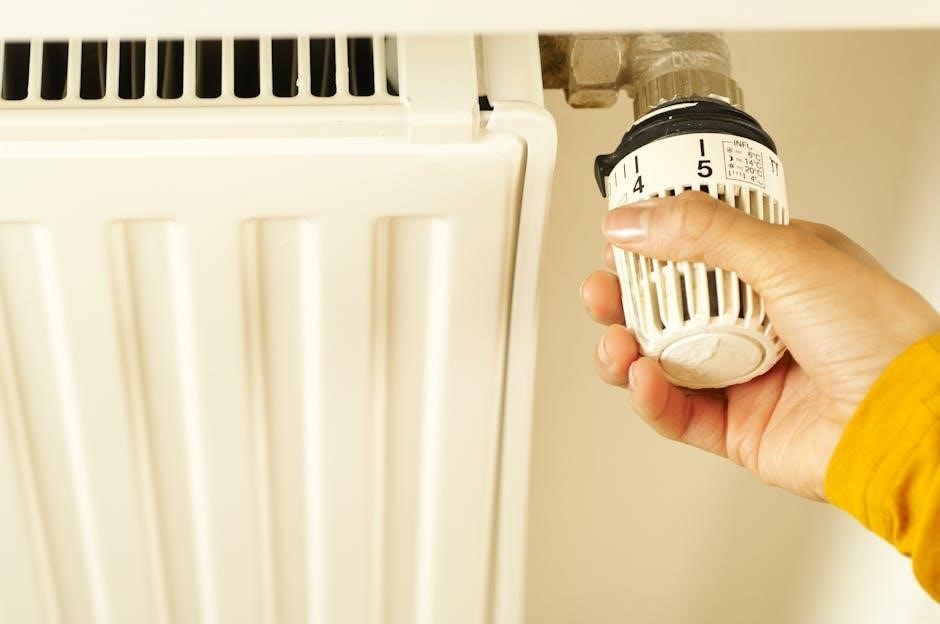
Beyond remote access‚ smart thermostats often learn your heating and cooling preferences‚ automatically optimizing schedules for maximum comfort and energy savings. Integration with voice assistants like Amazon Alexa or Google Assistant is common‚ enabling voice-controlled operation.
However‚ connectivity issues can arise‚ requiring troubleshooting of your home network and thermostat’s Wi-Fi connection. Security considerations are also important‚ ensuring your thermostat and network are protected from unauthorized access.

Rheem Thermostat Installation
Proper installation involves careful wiring‚ secure base mounting‚ and correct battery placement to ensure seamless operation and accurate temperature regulation within your home.
Wiring Diagrams & Color Codes
Understanding Rheem thermostat wiring is crucial for a successful installation. Typically‚ the common wire (C) provides continuous power‚ while the heating wire (W) activates the heating system. Cooling is managed by the Y wire‚ and the fan operates via the G wire.
Color coding can vary‚ but generally: Red signifies heating‚ blue represents cooling‚ green controls the fan‚ white is often the common wire‚ and yellow may indicate a secondary function. However‚ always verify with your specific model’s wiring diagram.
Incorrect wiring can damage your HVAC system or thermostat. Refer to the Rheem manual for precise diagrams and color codes corresponding to your unit. Molex connectors‚ as seen in tankless units‚ require careful attention to voltage and pin alignment. Double-check all connections before powering on.

Mounting the Thermostat Base
Properly mounting the thermostat base ensures a secure and accurate installation. Begin by turning off power to your HVAC system at the breaker box. Carefully remove the old thermostat‚ noting the wire connections. Use the provided mounting screws to attach the new Rheem thermostat base to the wall‚ ensuring it’s level.
Utilize a level to guarantee accurate temperature readings. Feed the thermostat wires through the opening in the baseplate. Avoid pinching or damaging the wires during this process.
Securely tighten the screws‚ but avoid over-tightening. A stable base is essential for reliable operation and prevents future disconnections. Double-check that the base is firmly attached before proceeding with wiring.
Battery Installation & Power-Up
Many Rheem thermostats require batteries for operation‚ even with a common (C) wire connected. Locate the battery compartment‚ typically on the side or back of the thermostat. Insert the specified type and number of batteries – usually AA or AAA – following the polarity markings (+ and -).
Ensure batteries are fresh for optimal performance. Once batteries are installed‚ the thermostat should power on automatically. If it doesn’t‚ double-check battery placement and ensure the HVAC system’s breaker is switched on.
Observe the display for initial startup messages. Some models may prompt you to set the date and time immediately upon power-up.

Rheem Thermostat Programming
Effectively programming your Rheem thermostat allows customized heating and cooling schedules‚ optimizing comfort and energy savings based on your daily routines.
Setting the Date and Time
Accurate date and time settings are fundamental for proper thermostat operation‚ especially with programmable and smart models. Begin by accessing the thermostat’s menu‚ typically through a ‘Menu’ or ‘Settings’ button. Navigate to the ‘Date’ and ‘Time’ options‚ often found within a ‘System’ or ‘Configuration’ submenu.
Use the up and down arrow buttons‚ or a similar interface‚ to adjust the month‚ day‚ and year. Confirm each selection before proceeding. Next‚ set the current time‚ paying attention to AM or PM designation. Some Rheem thermostats automatically synchronize with network time when connected to Wi-Fi‚ eliminating manual adjustments.
Verify the accuracy of the settings after completion‚ as incorrect time can disrupt programmed schedules and remote control functionality. Refer to your specific model’s manual for detailed instructions‚ as menu structures can vary.
Creating a Heating/Cooling Schedule
Programmable Rheem thermostats excel at energy savings through customized schedules. Access the ‘Schedule’ or ‘Program’ menu‚ usually found within the main thermostat settings. Most models offer pre-set schedules (like ‘Wake‚’ ‘Leave‚’ ‘Return‚’ ‘Sleep’) that you can modify‚ or allow for fully custom programming.
Define different temperature setpoints for various times of the day and days of the week. For example‚ lower the temperature while you’re away at work and raise it before you return. Consider separate schedules for weekdays and weekends. Carefully plan transitions to avoid abrupt temperature changes.
Review the schedule regularly and adjust it based on your lifestyle and seasonal changes to maximize comfort and efficiency. Consult your model’s manual for specific programming steps.

Temporary Holds & Overrides
Rheem thermostats offer ‘Hold’ and ‘Override’ features for immediate temperature adjustments without altering the programmed schedule. A ‘Hold’ typically maintains a set temperature indefinitely until manually canceled‚ overriding the scheduled program. ‘Overrides’ provide a temporary adjustment for a specified duration‚ after which the thermostat reverts to the regular schedule.
Access these functions via dedicated buttons or menu options – often labeled ‘Hold‚’ ‘Temporary Hold‚’ or ‘Override.’ Specify the desired temperature and duration (for overrides) carefully. These features are ideal for unexpected events or changes in occupancy;
Remember to cancel a ‘Hold’ when you want to resume the programmed schedule. Understanding the difference between ‘Hold’ and ‘Override’ ensures optimal control and energy savings.

Troubleshooting Common Issues
Addressing problems like unresponsive displays‚ inaccurate readings‚ or connectivity failures is crucial for maintaining a functional Rheem thermostat system.
This section provides solutions for common issues‚ ensuring efficient operation and preventing unnecessary service calls.
Thermostat Not Turning On
If your Rheem thermostat fails to power on‚ begin with the simplest checks. First‚ verify the thermostat is receiving power by inspecting the batteries – replace them with fresh ones‚ even if they seem partially charged.
Next‚ examine the circuit breaker dedicated to the water heater or HVAC system; a tripped breaker will immediately halt operation; Ensure the wiring connections at both the thermostat and the water heater/furnace are secure and free from corrosion.
Loose wires can interrupt the power supply. If the issue persists‚ consult the wiring diagram specific to your Rheem model to confirm correct connections. A faulty transformer within the system could also be the culprit‚ requiring professional diagnosis and replacement.
Inaccurate Temperature Readings
When a Rheem thermostat displays incorrect temperatures‚ several factors could be at play. First‚ ensure the thermostat isn’t directly exposed to sunlight‚ drafts‚ or heat-generating appliances‚ as these can skew readings. Check for obstructions blocking airflow around the thermostat.
Calibrate the thermostat if your model allows; refer to the manual for specific instructions. A dirty temperature sensor can also cause inaccuracies – gently clean the sensor area with a soft brush.
If the problem continues‚ verify the thermostat’s location isn’t influencing the reading. Consider professional recalibration or replacement if cleaning and calibration don’t resolve the issue;
Connectivity Problems (Smart Thermostats)
Rheem smart thermostats rely on a stable Wi-Fi connection for remote access and features. If experiencing connectivity issues‚ first confirm your home Wi-Fi network is functioning correctly. Restart both your router and the thermostat – a simple reboot often resolves temporary glitches.
Ensure the thermostat is within range of your Wi-Fi signal. Check the thermostat’s settings to verify the correct network and password are entered. If problems persist‚ consult Rheem’s support resources for specific troubleshooting steps related to your model.
Firmware updates can also improve connectivity; ensure your thermostat has the latest software installed.

Rheem Water Heater Specific Thermostat Considerations
Rheem water heaters‚ particularly Marathon and Powervent models‚ present unique thermostat considerations regarding element wattage‚ flammable vapor sensors‚ and wiring configurations.
Marathon Water Heater Element Wattage & Wiring
Rheem Marathon water heaters often feature a discrepancy between the element wattage listed on the manufacturer’s placard and the actual installed elements. The placard may indicate 4500 watts for upper and lower elements‚ however‚ many units ship with 3800-watt elements.
This is often due to wiring limitations; 3800-watt elements are commonly paired with 12-gauge wiring‚ while 4500-watt elements require 10-gauge wire. Utilizing the incorrect wattage element with the existing wiring can pose a safety hazard.
Always verify the actual element wattage stamped on the element itself and ensure it corresponds with the breaker size (typically 30 amps for 3800-watt elements) and wire gauge. Incorrect wiring can lead to overheating and potential failure of the heating elements or electrical system.
Powervent Water Heater Flammable Vapor Sensor (FVS) Issues
Rheem Powervent water heaters are equipped with a Flammable Vapor Sensor (FVS) designed to shut off the gas supply in the event of combustible fumes. Intermittent tripping of the FVS is a common issue‚ particularly in older units manufactured before 2007.
Surprisingly‚ Rheem acknowledges that the FVS can be triggered by non-threatening factors like dust and humidity‚ and warranty claims are often denied in these instances. Damp basements‚ especially those prone to water intrusion‚ are particularly susceptible to false alarms.
While a faulty sensor may require replacement‚ thoroughly investigate environmental factors before assuming a component failure. Ensure proper ventilation and address any sources of moisture or dust near the water heater.

Finding Rheem Thermostat Manuals & Support
Access Rheem’s official website for comprehensive manuals and resources. Explore online forums and community support groups for shared experiences and troubleshooting assistance.
Rheem Official Website Resources
Rheem’s official website serves as the primary hub for accessing detailed thermostat manuals‚ installation guides‚ and troubleshooting documentation. Users can navigate to the support section and utilize the model number search function to pinpoint specific resources for their device.
The website frequently features FAQs addressing common issues‚ alongside downloadable wiring diagrams and technical specifications. Furthermore‚ Rheem provides contact information for their customer support team‚ offering assistance via phone or email.
Registered users may also benefit from access to exclusive content‚ including software updates for smart thermostats and warranty information. Exploring the Rheem website ensures access to the most current and accurate information directly from the manufacturer‚ aiding in effective thermostat management.
Online Forums & Community Support
Numerous online forums and community platforms offer valuable support for Rheem thermostat users‚ providing a space to exchange knowledge and troubleshoot issues collaboratively. Websites like PexUniverse and dedicated HVAC forums host discussions where users share experiences‚ wiring diagrams‚ and solutions to common problems.
These communities often feature experienced DIY enthusiasts and professionals who can offer guidance on installation‚ programming‚ and repairs. Searching these forums can reveal solutions to specific error codes or compatibility concerns not readily available in official documentation.
However‚ it’s crucial to verify information obtained from forums with official Rheem resources to ensure accuracy and safety.