

Key Stage 2 Guided Reading: A Comprehensive Plan

Key Stage 2 guided reading fosters fluent reading, comprehension, and a love for literature through strategic activities and targeted skill development.
Key Stage 2 guided reading represents a pivotal stage in a child’s literacy journey, building upon the foundational skills established in Key Stage 1. It’s a carefully structured approach where small groups of students work with a teacher to explore texts at their instructional level.
This isn’t simply about decoding words; it’s about developing deeper comprehension, critical thinking, and a genuine appreciation for reading. Effective guided reading sessions involve explicit teaching of reading strategies, fostering discussion, and encouraging pupils to actively engage with the text. The goal is to empower students to become independent, confident readers capable of tackling increasingly complex materials.
The Importance of Reading Fluency
Reading fluency is paramount in Key Stage 2, acting as the bridge between decoding and comprehension. When students read fluently – with accuracy, rate, and prosody – cognitive resources aren’t consumed by the mechanics of reading. This allows them to focus on understanding the text’s meaning, making inferences, and analyzing the author’s intent.
Teachers model fluent reading, demonstrating appropriate pacing and expression. Repeated reading of the same text, alongside guided oral reading instruction, significantly improves fluency. Building fluency isn’t just about speed; it’s about reading with understanding and enjoyment, unlocking deeper engagement with literature.

Assessing Reading Levels in Key Stage 2
Accurate assessment is crucial for effective Key Stage 2 guided reading. Running records and careful observation provide valuable insights into a student’s reading behaviors – identifying strengths and areas needing support. These assessments reveal decoding skills, fluency, and comprehension strategies employed by the reader.
Regular monitoring allows teachers to tailor instruction and group students appropriately. Assessments aren’t solely about assigning levels; they inform instructional decisions. Response journals also offer a window into understanding, revealing a student’s ability to articulate thoughts and make connections with the text.
Grouping Strategies for Guided Reading
Flexible grouping is key in Key Stage 2 guided reading; Groups shouldn’t be static; they should shift based on assessed needs and targeted skills. Strategies include ability grouping – pairing students with similar reading levels – and strategic grouping, focusing on specific skills like inferencing or vocabulary.
Consider also mixed-ability groups, fostering peer support and collaborative learning. The goal is to provide appropriately challenging texts and focused instruction. Regularly reassess and adjust groups to ensure continued progress and cater to evolving student needs, maximizing learning potential.
Selecting Appropriate Texts
Choosing the right texts is crucial for successful Key Stage 2 guided reading. Texts should be engaging and relevant to students’ interests, fostering motivation and a love of reading. Prioritize texts that offer opportunities to practice targeted skills, like identifying author’s purpose or exploring character development.
Ensure a balance between familiar and challenging material. Texts shouldn’t be too easy, leading to boredom, or too difficult, causing frustration. Consider a variety of genres – fiction, non-fiction, poetry – to broaden reading experiences and cater to diverse preferences.

Text Complexity and Readability
Determining text complexity is vital for Key Stage 2 guided reading. Consider both quantitative measures – like word length and sentence structure – and qualitative factors, such as thematic complexity and knowledge demands. Readability formulas can offer a starting point, but teacher judgment is paramount.
Look for texts with a balance of familiar and challenging vocabulary. Scaffolding support, like pre-teaching key terms, can bridge gaps. Texts should allow students to apply decoding skills and build comprehension without being overwhelmed. A ‘just right’ text promotes engagement and fosters confidence.
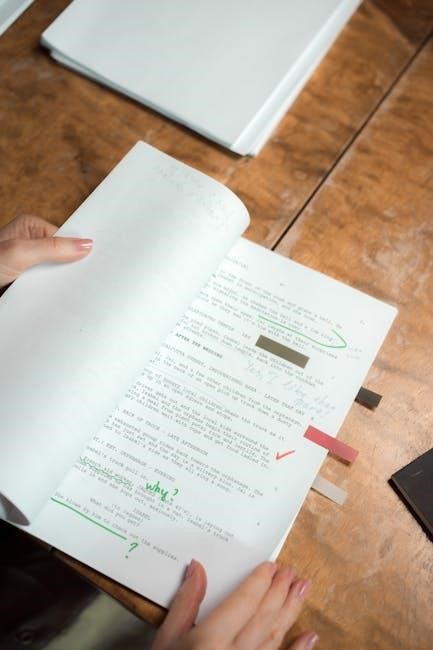
Genre Variety in Guided Reading
Exposing Key Stage 2 students to diverse genres within guided reading is crucial for broadening their literary experiences and comprehension skills. Include fiction – encompassing realistic fiction, fantasy, and historical narratives – alongside non-fiction texts like biographies, informational reports, and persuasive articles.
Genre exploration helps students recognize distinct textual features and authorial techniques. Poetry, playscripts, and even graphic novels offer unique challenges and opportunities. Varying genres cultivates a wider vocabulary and enhances critical thinking, preparing students for diverse reading demands across the curriculum.
Pre-Reading Activities
Effective Key Stage 2 guided reading begins before opening the text. Pre-reading activities prime students for comprehension and engagement. Activating prior knowledge is key – discuss related experiences or topics to build connections.
Vocabulary pre-teaching introduces challenging words, boosting confidence and fluency. Utilize visual aids, definitions, or contextual clues. Predicting what might happen based on the title or cover illustration sparks curiosity. Briefly outlining the text’s structure or purpose also prepares students for focused reading, maximizing their learning potential.
Activating Prior Knowledge
Before diving into a Key Stage 2 text, activating prior knowledge is crucial for comprehension. Begin by brainstorming what students already know about the topic. Open-ended questions like “What do you think of when you hear…?” encourage participation.
Relate the text to students’ personal experiences – have they encountered similar situations or themes? Visual prompts, like images or short videos, can also trigger relevant memories. This builds a bridge between the known and the unknown, making the text more accessible and meaningful, ultimately enhancing their reading experience.
Vocabulary Pre-teaching
Key Stage 2 guided reading benefits significantly from strategic vocabulary pre-teaching. Identify potentially challenging words before reading – those unfamiliar or with multiple meanings. Don’t simply provide definitions; explore words in context.
Encourage students to predict meaning based on surrounding sentences. Use visuals, synonyms, and antonyms to deepen understanding. Interactive activities, like word sorts or creating sentences, solidify learning. Pre-teaching reduces cognitive load during reading, allowing students to focus on comprehension and enjoy the text more fully.
During Reading Strategies
Effective Key Stage 2 guided reading employs strategies to actively engage students while they read. While round robin reading can be used, prioritize alternatives like echo reading or choral reading to promote fluency. Implement “Think-Pair-Share” activities, prompting students to discuss predictions, clarify confusion, or analyze character motivations with a partner before sharing with the group.
Model fluent reading and encourage students to monitor their own comprehension. Pose strategic questions to guide thinking and ensure active engagement with the text, fostering deeper understanding.
Round Robin Reading & Alternatives
Traditional round robin reading, where students take turns reading aloud, can be beneficial for practicing oral reading fluency, but it also presents challenges. It can create anxiety for struggling readers and limit comprehension for those waiting their turn. Therefore, explore alternatives like echo reading – where the teacher reads a sentence and students repeat it – or choral reading, where the entire group reads together.
These methods build confidence and promote a shared reading experience, supporting fluency development in a less pressured environment.
Think-Pair-Share Activities
Think-Pair-Share is a versatile strategy enhancing engagement and comprehension during Key Stage 2 guided reading. Initially, students individually think about a posed question related to the text. Next, they pair with a classmate to discuss their ideas, building upon each other’s understanding. Finally, pairs share their combined thoughts with the larger group.
This collaborative approach encourages active participation, allows students to articulate their reasoning, and exposes them to diverse perspectives, ultimately deepening their grasp of the material.
Focused Reading Skills
Focused Reading Skills within Key Stage 2 guided reading sessions target specific comprehension areas. These include inferencing and deduction, requiring students to ‘read between the lines’ and draw conclusions. Understanding author’s purpose helps children analyze why a text was created.
Developing skills in character development allows for deeper engagement with narratives, while exploring perspective fosters empathy and critical thinking. Explicitly teaching these skills equips students with the tools for robust textual analysis and improved comprehension.

Inferencing and Deduction
Inferencing and deduction are crucial skills in Key Stage 2 guided reading, moving beyond literal understanding. Students learn to utilize clues within the text, combined with their prior knowledge, to make informed guesses and draw conclusions. This involves identifying subtle hints, analyzing character motivations, and predicting outcomes.
Effective questioning techniques prompt children to justify their inferences with evidence from the text. Activities should encourage ‘reading between the lines’ and developing logical reasoning, strengthening comprehension and analytical abilities.
Identifying Author’s Purpose
Key Stage 2 guided reading necessitates understanding why an author writes something – their purpose. Is it to inform, persuade, entertain, or explain? Students learn to analyze textual clues like tone, word choice, and structure to discern the author’s intent.
Discussions should focus on how the author attempts to influence the reader. Activities might involve identifying persuasive techniques or analyzing how information is presented. Recognizing author’s purpose enhances critical thinking and deepens comprehension, fostering a more engaged reading experience.
Understanding Character Development
Key Stage 2 guided reading explores how characters evolve throughout a story. Students analyze a character’s actions, dialogue, thoughts, and interactions with others to understand their motivations and changes.
Activities involve charting character traits, predicting behaviors, and discussing how events impact a character’s growth. Examining internal conflicts and external challenges reveals the complexities of character development. This skill fosters empathy and a deeper understanding of narrative structure, allowing students to connect with stories on a more meaningful level.
Exploring Perspective in Texts

Key Stage 2 guided reading encourages students to recognize that stories are told from specific viewpoints. Analyzing perspective involves identifying who is narrating the tale and how their position influences the events presented.
Activities include role-playing, rewriting scenes from different characters’ perspectives, and discussing how biases or limited knowledge shape a narrative. Understanding perspective fosters critical thinking and empathy, enabling students to appreciate multiple interpretations of events and recognize the subjective nature of storytelling. This skill builds analytical abilities and promotes nuanced comprehension.
Post-Reading Activities
Key Stage 2 post-reading activities solidify comprehension and encourage deeper engagement with texts. Effective techniques include thoughtfully crafted comprehension questions, moving beyond simple recall to probe inferential understanding and critical analysis.
Summarizing and retelling exercises help students synthesize information and demonstrate their grasp of the narrative structure. Creative responses, such as writing alternative endings, creating character diaries, or designing book covers, foster imagination and personal connection. These activities transform reading from a passive reception of information into an active, meaningful learning experience.
Comprehension Questioning Techniques
Key Stage 2 comprehension questioning should move beyond literal recall, prompting students to delve deeper into the text. Utilize a range of question types – inferential, predictive, evaluative, and clarifying – to stimulate critical thinking.
Open-ended questions encourage detailed responses and discussion, while closed questions check for specific understanding. Employ the “think-pair-share” strategy to allow students to formulate answers collaboratively before sharing with the class. Model effective questioning techniques yourself, demonstrating how to locate evidence within the text to support interpretations and build analytical skills.
Summarising and Retelling
Key Stage 2 summarising and retelling activities solidify comprehension and build fluency. Encourage students to identify the main ideas and key events in a concise manner, focusing on the ‘who, what, where, when, why, and how’.
Retelling, initially guided with prompts, should progress towards independent narratives. Utilize graphic organizers like story maps to visually represent plot structure. Emphasize the importance of sequencing events logically and using descriptive language. These skills not only demonstrate understanding but also enhance recall and improve writing abilities.
Creative Responses to Texts
Key Stage 2 creative responses move beyond simple comprehension, fostering deeper engagement with texts. Encourage students to explore alternative perspectives through activities like role-playing, writing diary entries from a character’s viewpoint, or composing letters to authors.
Artistic interpretations, such as creating storyboards or designing new book covers, can also unlock understanding. Dramatic performances and writing sequels or prequels stimulate imagination and critical thinking. These activities allow students to demonstrate their understanding in unique and personally meaningful ways, building confidence and a love for literature.
Developing Vocabulary
Key Stage 2 guided reading provides excellent opportunities for vocabulary expansion. Explicitly teaching new words before reading, utilizing context clues, and encouraging word analysis are crucial strategies. Students should be taught to break down unfamiliar words into prefixes, suffixes, and root words.
Regularly incorporating dictionary and thesaurus use empowers independent learning and nuanced understanding. Activities like word sorts, creating vocabulary journals, and playing word games reinforce learning. A rich vocabulary directly impacts reading comprehension and overall academic success, fostering confident communicators.
Context Clues and Word Analysis
Key Stage 2 guided reading heavily emphasizes utilizing context clues to decipher unfamiliar words. Students learn to identify surrounding sentences for hints about meaning – definitions, synonyms, or examples. Simultaneously, word analysis skills are developed, breaking down words into manageable parts.
This includes recognizing common prefixes, suffixes, and root words to unlock meaning. Explicitly teaching morphological awareness empowers students to independently decode and understand new vocabulary. Combining context clues with structural analysis builds confident, strategic readers capable of tackling complex texts.
Using Dictionaries and Thesauruses
Key Stage 2 guided reading integrates dictionary and thesaurus skills to expand vocabulary and refine understanding. Students are guided to locate definitions, pronunciations, and multiple meanings of words, fostering independent learning. Beyond simple definitions, they learn to discern the most appropriate meaning within a given text’s context.
Thesaurus use encourages exploration of synonyms, enriching writing and promoting nuanced comprehension. This practice helps students move beyond basic vocabulary, enhancing expression and deepening their appreciation for the subtleties of language. These tools become essential for confident reading and writing.

Monitoring Progress and Assessment
Key Stage 2 guided reading progress is meticulously monitored through varied assessment methods. Running records provide detailed insights into a student’s reading behaviors – fluency, accuracy, and self-correction strategies. Observational notes capture engagement, participation, and comprehension during group sessions, revealing individual strengths and areas needing support;
Guided reading response journals offer a platform for students to demonstrate understanding through written reflections and answers to focused questions. These journals track growth over time, providing valuable data for targeted instruction and personalized learning pathways. Regular assessment informs adjustments to grouping and text selection.
Running Records and Observation
Key Stage 2 guided reading benefits greatly from running records, a detailed, real-time assessment of a student’s reading performance. These records document errors, self-corrections, and fluency, revealing decoding strategies and comprehension challenges. Careful observation during guided reading sessions complements running records, noting student engagement, participation, and interactions with the text.
Observational notes capture a student’s ability to apply learned skills, infer meaning, and contribute to discussions. This combined approach – quantitative data from records and qualitative insights from observation – provides a holistic view of each reader’s progress and informs instructional decisions.
Guided Reading Response Journals
Key Stage 2 students benefit from utilizing guided reading response journals to solidify comprehension and encourage critical thinking. These journals serve as a dedicated space for students to record their thoughts, questions, and interpretations of the text. Entries can include summaries, character analyses, predictions, and connections to personal experiences.
Regular journal entries promote metacognition, allowing students to monitor their understanding and identify areas needing clarification. Teachers can provide prompts to guide responses, fostering deeper engagement with the text and providing valuable insight into individual learning needs.
Utilizing Technology in Guided Reading
Key Stage 2 guided reading can be significantly enhanced through thoughtful technology integration. Interactive ebooks offer features like built-in dictionaries and text-to-speech functionality, supporting diverse learners. Online platforms provide access to a wider range of texts and collaborative annotation tools, fostering discussion and shared understanding.
Educational apps can gamify reading practice, boosting engagement and motivation. Digital response journals allow for easy sharing and teacher feedback. However, it’s crucial to balance technology with traditional methods, ensuring technology serves as a tool to support reading, not replace it.
Differentiation in Guided Reading
Key Stage 2 guided reading demands differentiation to meet the diverse needs of learners. Grouping by reading level is a starting point, but consider flexible grouping based on specific skill deficits or strengths. Provide varied text options – different genres, lengths, and complexity levels – within each group.
Scaffolding activities are essential; offer sentence starters, graphic organizers, or pre-teaching of key vocabulary. Challenge higher-level readers with extension tasks like deeper inferencing questions or creative writing responses. Regularly assess and adjust groupings and support to ensure all students are progressing.
The Role of the Teacher in Guided Reading
In Key Stage 2 guided reading, the teacher acts as a facilitator, not a director. Modeling fluent reading and thinking aloud demonstrates effective strategies. Carefully observe students during reading, noting strengths and areas for development. Pose insightful questions that prompt deeper comprehension and critical thinking.
Provide targeted support and scaffolding, intervening when necessary to guide struggling readers. Foster a supportive classroom environment where students feel comfortable taking risks and sharing their interpretations. The teacher’s role is to empower students to become independent, confident readers.
Building a Reading Culture in the Classroom
A thriving reading culture in Key Stage 2 necessitates consistent exposure to diverse texts and enthusiastic modeling by the teacher. Create inviting reading spaces filled with appealing books, fostering a sense of comfort and exploration. Encourage book talk and recommendations, allowing students to share their reading experiences.
Celebrate reading achievements and provide opportunities for students to read for pleasure. Integrate reading across the curriculum, demonstrating its relevance to all subjects. A classroom where reading is valued and enjoyed will cultivate lifelong readers.
Connecting Guided Reading to Wider Curriculum
Effective Key Stage 2 guided reading extends beyond literacy, enriching learning across all subjects; Texts selected for guided reading can directly link to history, science, or geography topics, providing authentic contexts for comprehension. For example, reading historical fiction alongside history lessons deepens understanding.
Encourage students to apply reading skills – inference, analysis – to texts in other disciplines. This interdisciplinary approach reinforces skills and demonstrates the relevance of reading to real-world learning, fostering a more holistic educational experience.

Ultimately, successful Key Stage 2 guided reading isn’t solely about decoding and comprehension; it’s about cultivating a lifelong love of reading. By providing engaging texts, supportive environments, and opportunities for discussion, we empower students to become confident, independent readers.
Remember to prioritize enjoyment and choice, allowing children to explore genres and authors that resonate with them. A positive reading experience builds intrinsic motivation, transforming reading from a task into a treasured pastime, benefiting them far beyond the classroom.