
Heavy Duty Workbench Plans PDF: A Comprehensive Guide
Discover robust plans for building a heavy-duty workbench, ideal for woodworking and metalworking projects. Explore free PDF resources like Lost Art Press and LookInto.com, offering detailed instructions.
Learn about essential features, material selection, and construction techniques to create a stable and durable workspace. Find guidance on vises, hold-downs, and customization options.
Access comprehensive PDF guides to build a workbench for under $100, utilizing 2×4 lumber and lamination methods for strength and affordability. Begin your build today!
Heavy-duty workbenches represent the cornerstone of any well-equipped workshop, serving as a stable and reliable platform for a vast array of projects. Unlike lighter-duty alternatives, these benches are engineered to withstand significant stress, providing unwavering support during demanding tasks like planing, sawing, and assembly. The pursuit of heavy duty workbench plans PDF reflects a desire for a robust workspace capable of handling both woodworking and metalworking endeavors.
Historically, workbenches evolved from simple, rudimentary structures to the sophisticated designs we see today. Early benches prioritized functionality, but modern plans emphasize both strength and ergonomic considerations. A key aspect of a heavy-duty workbench is its ability to resist racking – lateral movement that compromises accuracy. This stability is achieved through careful design, material selection, and robust joinery.
For those new to workbench construction, understanding the fundamental principles is crucial. Many find value in starting with readily available PDF plans, such as those offered by Lost Art Press or LookInto.com, which provide step-by-step guidance. These resources often cater to varying skill levels and budgets, making it accessible for both beginners and experienced woodworkers to build a lasting and functional workspace.
Why Choose a Heavy Duty Workbench?
Opting for a heavy-duty workbench over lighter alternatives delivers substantial benefits for serious woodworkers and metalworkers. The primary advantage lies in its unparalleled stability; a robust bench minimizes vibrations and flex during demanding tasks like planing and sawing, leading to greater precision and control. This stability isn’t merely about weight, but intelligent design and construction, often detailed in heavy duty workbench plans PDF.
Furthermore, a well-built heavy-duty workbench significantly enhances safety. Its solid construction reduces the risk of tipping or collapsing under stress, protecting both the user and the workpiece. The durability of these benches also translates to long-term value, eliminating the need for frequent replacements.
Consider that a professional joiner emphasizes the importance of lateral stability, noting that even experienced users underestimate the need for a truly solid base. While vises and holdfasts are valuable, they are most effective when mounted on a rock-solid foundation. PDF plans often prioritize this foundational strength, allowing for future customization with vises and clamps like Jorgensen hand screws.
Essential Features of a Robust Workbench
A truly robust workbench, as detailed in many heavy duty workbench plans PDF, incorporates several key features. Paramount is a substantial, thick top – often laminated from multiple boards – to resist warping and provide a stable work surface. The design should avoid structural fasteners through the ends of boards, minimizing weakness.
Critical is a strong, stable frame, frequently constructed from 2×4 lumber, though selecting straight lumber is vital, potentially requiring planing. Block supports underneath the top are essential for distributing weight and preventing sagging. Adequate foot room is also crucial for comfortable and ergonomic working.
Beyond the core structure, consider features like integrated tool storage – drawers and shelves enhance organization. A well-placed vise, whether woodworking or metalworking specific, is invaluable, though a professional notes that excellent results can be achieved with Jorgensen hand screws and F-clamps as a starting point. Finally, a finished and protected surface adds durability and aesthetic appeal.
Workbench Design Considerations
Carefully plan your workbench’s size, material, and leg design for optimal stability. Consider wood type, top thickness, and grain orientation when reviewing heavy duty workbench plans PDF.
Workbench Size and Dimensions
Determining the ideal workbench size is crucial, influenced by available space and intended projects. Consider a length of 60-72 inches, a depth of 24-36 inches, and a height of 34-38 inches – adjust for personal ergonomics.
Larger workbenches offer more surface area for extensive tasks, while smaller ones suit limited spaces. Prioritize lateral stability; a heavier, more stable bench is paramount, especially during planing and sawing. Remember, it’s better to err on the side of larger, providing flexibility for future projects.
Reviewing heavy duty workbench plans PDF will reveal common dimensions, but customization is key; Think about the size of materials you’ll typically work with. Ensure adequate foot room beneath the bench, a frequently overlooked but vital ergonomic consideration. Proper dimensions contribute significantly to a comfortable and productive workspace.
Material Selection: Wood Types for Strength
Choosing the right wood is fundamental for a robust workbench. Hardwoods like maple, beech, and oak are excellent choices, offering exceptional strength and durability. Softwoods, while more affordable, may lack the necessary rigidity for heavy-duty use.
Many heavy duty workbench plans PDF advocate for utilizing readily available lumber like 2x4s or 2x12s. However, even with these, selecting straight, knot-free pieces is vital. Laminating multiple boards together, as suggested by Lost Art Press plans, significantly increases strength and stability.
Consider the wood’s grain orientation during lamination to maximize resistance to warping. Avoid using boards with grain ends exposed, as these are prone to splitting. Prioritize dense, close-grained wood for the workbench top, ensuring it can withstand repeated impacts and heavy loads. Proper material selection guarantees a long-lasting, reliable workbench.
Leg Design and Stability
Robust leg design is paramount for a stable, heavy-duty workbench. Plans often utilize a frame constructed from 2×4 lumber, prioritizing simplicity and affordability. However, bracing is crucial to prevent racking and wobble. Diagonal braces, connecting the legs, significantly enhance rigidity.
LookInto.com’s DIY workbench design features legs positioned on the outside perimeter, contributing to overall stability. Ensure legs are firmly attached to the frame using appropriate fasteners – screws or bolts – and consider adding foot levelers for uneven surfaces.
A wider leg stance generally provides greater stability, but also increases the workbench’s footprint. Prioritize a design that distributes weight evenly and resists lateral movement. Remember, a heavy workbench needs to be incredibly stable; planing and sawing demand it. Solid leg construction is the foundation of a dependable workspace.
Top Construction: Thickness and Wood Grain Orientation

Workbench top construction significantly impacts its strength and longevity. Lost Art Press plans advocate for laminating multiple layers of 2×12 lumber, halved, to achieve substantial thickness. This method distributes weight effectively and minimizes warping. Aim for a top at least 3-4 inches thick for heavy-duty use.
Wood grain orientation is critical. Alternating grain direction in each layer of lamination enhances stability and resists cupping. Avoid having all grain running in the same direction, as this creates a weak point. Consider using readily available lumber, but be prepared to plane it for flatness.
Block supports underneath the top, as seen in the LookInto.com design, further reinforce the structure. Ensure fasteners don’t penetrate through the entire top, potentially causing issues. A solid, well-constructed top is the heart of any heavy-duty workbench.
Building a Heavy Duty Workbench: Step-by-Step
Follow detailed PDF plans from sources like LookInto.com, starting with frame construction using 2x4s. Laminate the top, ensuring squareness and levelness, and then install your chosen vise system.
Frame Construction: Utilizing 2×4 Lumber
Begin the workbench foundation by carefully selecting 2×4 lumber, acknowledging that these boards often aren’t perfectly straight. Plan to plane the wood as needed to achieve necessary flatness and alignment – a crucial step for overall stability. The LookInto.com DIY workbench project, available online, provides a solid framework for this stage.
Focus on constructing a robust frame that distributes weight effectively. This design typically involves arranging the 2x4s to create a perimeter, providing substantial support for the workbench top. Avoid relying on structural fasteners directly into the ends of the boards, as this can compromise strength over time. Instead, utilize intermediate supports and strategic joinery.
Consider the importance of horizontal boards positioned along the outer perimeter of the frame. These boards contribute significantly to the workbench’s rigidity and prevent racking. Remember that a stable frame is paramount, as it forms the base for all subsequent woodworking operations. Prioritize a solid, well-constructed frame before moving on to top assembly.
Top Assembly: Lamination Techniques
Achieve a thick, stable workbench top through lamination, a technique favored in plans from Lost Art Press. This involves ripping wider lumber, such as 2x12s, in half and gluing the resulting pieces together. This method surpasses using a single, thick board, minimizing warping and maximizing strength.
Ensure proper wood grain orientation during lamination. Alternate the direction of the grain in each layer to counteract natural wood movement and prevent cupping. Apply a generous, even coat of wood glue between each layer, clamping firmly to create a solid bond. Allow sufficient drying time before proceeding.
Consider the benefits of laminated tops – they are exceptionally flat and resistant to deformation. This is vital for precision woodworking. Remember to use ample clamping pressure during the gluing process to eliminate gaps and ensure a seamless surface. A well-laminated top provides a durable and reliable work surface for years to come.
Fastener Selection: Screws vs. Bolts
Choosing between screws and bolts for your heavy-duty workbench hinges on the joint’s stress and desired longevity. Screws are quicker to install and suitable for less critical connections, like attaching the workbench top to the frame’s perimeter supports. However, they lack the clamping force of bolts.
Bolts, particularly carriage bolts with washers, excel in high-stress areas like leg-to-frame connections. Their superior clamping power resists racking and ensures a rock-solid structure. Consider pre-drilling holes slightly larger than the bolt diameter to prevent wood splitting.
For optimal strength, combine both. Use bolts for the primary structural joints and screws for secondary attachments. Ensure fasteners are appropriately sized for the lumber thickness. Remember to countersink screws for a flush finish and avoid protruding bolt heads. A thoughtful fastener strategy guarantees a durable, long-lasting workbench.
Ensuring Squareness and Levelness
Achieving perfect squareness and levelness is paramount for a functional heavy-duty workbench. Begin by meticulously checking the frame’s diagonals; they must be equal. Use a large square to verify 90-degree angles at each corner during frame construction. Minor adjustments can be made with clamps and shims.
Once the frame is assembled, place it on a level surface. Employ a spirit level to identify any unevenness in the floor or frame. Shim the legs as needed to achieve a perfectly level base. For the workbench top, ensure it’s flat and free of warping before attachment.
Regularly check for squareness throughout the build process. A slightly out-of-square workbench will compromise accuracy and stability. Take your time and prioritize precision; a solid foundation is crucial for all woodworking tasks. Don’t underestimate the importance of these fundamental checks!

Vise and Hold-Down Systems
Explore various vise options – woodworking and metalworking – for secure workpiece clamping. Consider holdfasts, bench dogs, and Jorgensen hand screws as alternatives. Personalize your setup!
Types of Vises: Woodworking and Metalworking
Selecting the right vise is crucial for a functional heavy-duty workbench, and the choice often depends on your primary work – woodworking or metalworking. Woodworking vises typically prioritize a broad, flat jaw surface to securely hold wood without marring it. Common types include the traditional face vise, mounted on the front of the workbench, and tail vises, positioned at the end for holding longer stock.
Metalworking vises, conversely, require robust construction and hardened steel jaws to withstand significant clamping forces and resist deformation. These often feature swivel bases for versatile positioning and interchangeable jaws for accommodating various shapes. Consider a machinist vise for precision work or a pipe vise for holding round stock.
However, a professional joiner suggests that a complex vise and dog setup isn’t always necessary. Two Jorgensen wooden hand screws and two large F-clamps can achieve similar results, offering versatility and potentially saving expense. Ultimately, the “best” vise is a personal preference, and starting with a solid bench allows for later additions.
Installing a Vise: Placement and Mounting
Proper vise installation is paramount for safety and functionality. Placement should consider your dominant hand and typical workflow, ensuring comfortable access and efficient clamping. Generally, a face vise is mounted flush with the front edge of the workbench, allowing maximum workpiece extension. Carefully plan the height; the jaw’s top surface should be slightly above the workbench surface for optimal leverage.
Mounting requires a robust connection to the workbench frame. Avoid simply screwing into the workbench top, as this can lead to instability. Instead, reinforce the area beneath the vise with substantial blocking, creating a solid mounting surface for lag bolts. Ensure the vise is perfectly square to the workbench edge before tightening the bolts.
Remember, a stable vise is a safe vise. Consider the weight of the vise and the forces it will endure when selecting appropriate fasteners and reinforcement. If opting for a simpler setup, hand screws and clamps require no permanent installation, offering flexibility;
Holdfasts and Bench Dogs: Alternatives to Vises
Holdfasts and bench dogs present versatile alternatives to traditional vises, offering unique clamping solutions. Holdfasts, inserted into bench dog holes, provide exceptional holding power from above, ideal for securing workpieces vertically. Bench dogs, flush-mounted into the workbench surface, work in conjunction with holdfasts or can be used with clamping jaws.
These systems excel in situations where a vise’s jaw might obstruct your work. They allow for clamping along the entire workbench surface, providing greater flexibility. Installation involves drilling precisely spaced holes across the workbench top, requiring careful layout and accurate drilling.
A professional furniture maker suggests that two Jorgensen hand screws and two large F-clamps can achieve similar results to a vise and dog setup, offering versatility without the expense. Adding more hand screws further expands clamping options. Consider these alternatives for a cost-effective and adaptable workbench setup.
Using Jorgensen Hand Screws and F-Clamps
Jorgensen hand screws, featuring wooden blocks and steel threads, offer a remarkably versatile clamping solution for woodworking. Combined with large F-clamps, they can replicate much of the functionality of a dedicated vise and dog system, often at a lower cost. A seasoned joiner highlights their effectiveness, stating they can handle nearly any clamping task.
The beauty of this approach lies in its adaptability. Hand screws excel at applying pressure from multiple angles, accommodating irregular shapes and complex assemblies. F-clamps provide robust, straight-line clamping force for gluing and securing larger pieces. Two hand screws and two F-clamps form a solid starting point.
Expanding to four hand screws unlocks even greater versatility, allowing for intricate workholding configurations. This method is particularly appealing for those initially hesitant to invest in a full vise and dog setup, offering a practical and effective alternative. It’s a testament to the power of simple, well-made tools.
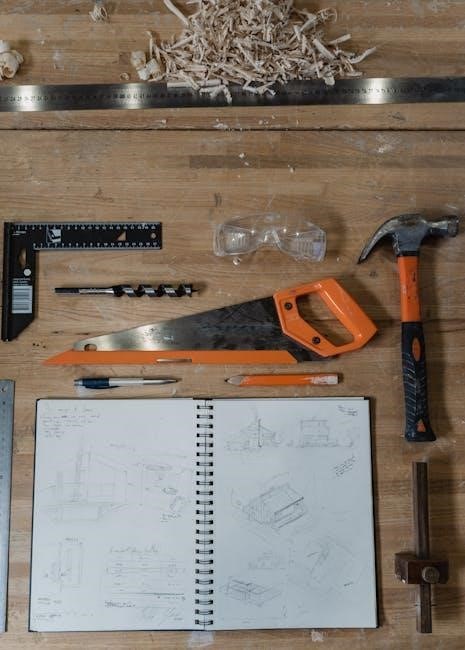
Free Workbench Plans and Resources
Access readily available, cost-effective PDF workbench plans from Lost Art Press and LookInto.com. Discover detailed instructions for building a sturdy, heavy-duty workbench quickly.
Download free plans and begin constructing your ideal workspace today, utilizing readily available materials and proven techniques. Start building now!
Lost Art Press Workbench Plans
Lost Art Press offers a highly regarded, freely available workbench plan designed by Chris Schwarz. The plans are accessible directly on their website, providing a comprehensive guide for constructing a robust and exceptionally stable workbench suitable for serious woodworking endeavors.
Schwarz’s design centers around a lamination technique, utilizing readily available 2×12 lumber that is ripped in half. This approach allows for the creation of a thick, solid workbench top, minimizing warping and maximizing durability. The plans detail the entire process, from material selection and preparation to assembly and finishing.
A key feature of these plans is the emphasis on traditional joinery methods, promoting a strong and long-lasting build. The detailed instructions and accompanying illustrations make the project accessible to woodworkers of varying skill levels. The design prioritizes stability and functionality, ensuring a solid platform for demanding tasks. Download the PDF and begin building a lasting workbench!
Explore this valuable resource for a time-tested workbench design.

LookInto.com DIY Workbench Project
LookInto.com presents a compelling DIY workbench project, boasting a remarkably affordable build cost – under $100! This plan is particularly attractive for those seeking a heavy-duty workbench without a significant financial investment. The project’s design focuses on simplicity and efficiency, streamlining the construction process.
A standout feature of this workbench is its clever use of joinery, employing a rabbet-like joint system that simplifies assembly while maintaining exceptional structural integrity. This method effectively distributes weight, contributing to the workbench’s overall stability and robustness. The design thoughtfully incorporates features like ample foot room and strategically placed horizontal boards for added support.
The plans emphasize avoiding structural fasteners that intersect the grain ends of boards, further enhancing the workbench’s longevity. Block supports are integrated under the top for additional reinforcement. Download the PDF plans from LookInto.com and start building a sturdy, cost-effective workspace!
Enjoy a practical and economical workbench solution.
PDF Plan Availability and Sources
Accessing detailed heavy-duty workbench plans in PDF format is readily achievable through several online resources. Lost Art Press offers a valuable resource, providing the book and associated plans completely free of charge on their website. These plans, developed by Schwarz, advocate for a lamination technique utilizing ripped 2×12 lumber, creating a remarkably strong and stable workbench top.
Alternatively, LookInto.com provides a comprehensive DIY workbench project with downloadable PDF plans, designed for construction under $100. This plan is ideal for budget-conscious woodworkers seeking a robust and functional workspace. Both sources offer detailed instructions, material lists, and visual aids to guide you through the building process.
Consider exploring online woodworking forums and communities, where members often share their own PDF plans and modifications. Remember to verify the credibility of any downloaded plans before commencing construction. Download your PDF today!

Workbench Customization and Enhancements
Personalize your workbench with drawers, shelves, and integrated tool storage. Enhance ergonomics with foot room and finishing for protection. Customize for optimal workflow!
Adding Drawers and Shelves
Maximizing storage is crucial for any functional workbench, and incorporating drawers and shelves significantly enhances organization. Consider the types of tools you frequently use when planning drawer sizes and placement; smaller drawers are ideal for precision instruments, while larger ones can accommodate hand tools or power tool accessories.
Shelves offer open storage for items you need quick access to, like sandpaper, finishes, or frequently referenced books. Strategically position shelves to avoid obstructing your work area or interfering with legroom. Utilize the space beneath the workbench top for full-extension drawers, providing convenient access to larger tools or materials.
Construction can be simplified by using plywood for drawer boxes and shelf supports, ensuring a sturdy and cost-effective build. Remember to reinforce drawer bottoms to prevent sagging under heavy loads. Integrating drawer slides and shelf supports securely into the workbench frame is essential for long-term durability and smooth operation.
Integrating Tool Storage Solutions
Beyond basic drawers and shelves, a truly efficient workbench incorporates dedicated tool storage solutions. Consider building custom tool wells directly into the workbench top to keep frequently used hand tools readily accessible. These recessed areas prevent tools from rolling around and provide a designated space for each item.
Pegboards mounted on the workbench sides or back offer versatile storage for hanging tools, maximizing vertical space. Alternatively, install French cleats to create a modular storage system, allowing you to easily rearrange tool holders as your needs evolve. Think about incorporating a dedicated space for power tool storage, potentially with built-in outlets for convenient charging.
Don’t overlook the value of mobile tool carts that can be tucked under the workbench when not in use. These provide additional storage and allow you to move tools closer to your work area as needed. Prioritize accessibility and organization to create a workspace that streamlines your workflow and enhances productivity.
Finishing and Protecting Your Workbench
Protecting your newly built heavy-duty workbench is crucial for longevity. Consider a durable finish that can withstand the rigors of daily use. Polyurethane is an excellent choice, offering resistance to scratches, spills, and chemicals. Apply several coats, sanding lightly between each application, for a smooth and lasting surface.
Alternatively, a simple coat of boiled linseed oil can provide a natural look and feel while offering some protection. However, linseed oil requires more frequent reapplication. For added durability, consider applying a paste wax over the polyurethane or linseed oil finish.
Pay attention to the underside of the workbench, as it’s susceptible to moisture and damage. A coat of paint or sealant can help prevent warping and rot. Regular cleaning and maintenance will also extend the life of your workbench, ensuring it remains a reliable workspace for years to come.
Foot Room and Ergonomic Considerations
Prioritizing foot room is essential for comfortable and efficient work at your heavy-duty workbench. Ensure sufficient space beneath the workbench top to allow for natural foot movements and shifting positions. A well-designed workbench, like the one from LookInto.com, incorporates this feature with horizontal boards positioned on the outer parameter.
Ergonomics play a vital role in preventing fatigue and strain during extended work sessions. Consider the workbench height in relation to your own body dimensions. Ideally, the workbench surface should be at a height that allows you to work with your elbows bent at a 90-degree angle.
Adding a footrest can further enhance comfort and support. Think about the placement of frequently used tools and materials to minimize reaching and bending. A thoughtfully designed workbench promotes good posture and reduces the risk of musculoskeletal issues.