

Canon 70D User Manual: A Comprehensive Guide

This comprehensive guide details the Canon EOS 70D‚ offering downloadable drivers‚ software‚ and PDF manuals for optimal performance and troubleshooting assistance.
Explore detailed instructions‚ covering setup‚ features‚ and operation‚ ensuring a seamless experience with your Canon EOS 70D camera.
Welcome to the world of the Canon EOS 70D! This powerful DSLR offers a blend of performance and versatility‚ making it ideal for both enthusiasts and professionals. This manual serves as your guide to unlocking the camera’s full potential.
From initial setup to advanced techniques‚ we’ll cover everything you need to know. Access downloadable software‚ firmware‚ and detailed PDF manuals to enhance your photographic journey. Prepare to explore a new level of creativity with your Canon EOS 70D!
Key Features and Specifications
The Canon EOS 70D boasts a 20.2MP CMOS sensor and Dual Pixel CMOS AF for exceptional image quality and smooth video recording. It features a 3.0-inch Vari-Angle touchscreen LCD and intelligent viewfinder.
Key specs include a high-speed continuous shooting rate‚ extensive ISO range‚ and built-in Wi-Fi connectivity. Downloadable resources‚ including the PDF manual‚ provide detailed specifications and explain how to leverage these features for stunning results.
Unboxing and Initial Setup
Upon unboxing your Canon EOS 70D‚ verify all included components: camera body‚ battery‚ charger‚ strap‚ and cables. The included CD-ROM (or downloadable PDF manual) guides initial setup.
Begin by inserting the battery‚ installing the SD card‚ and connecting the camera to a computer for driver and software installation. Refer to the manual for detailed instructions on menu navigation and customizing initial settings for optimal performance.
Understanding the Camera Body
The Canon EOS 70D’s body features a robust build and ergonomic design. Familiarize yourself with its layout for efficient operation. The camera instruction manual (available as a PDF) details each component.
Key elements include the mode dial‚ shutter button‚ control dials‚ and various buttons for accessing menus and settings. Understanding these physical controls is crucial for mastering the camera’s functionality and achieving desired results.
Buttons and Dials Explained
The Canon 70D’s buttons and dials offer direct control over camera settings. The main dial adjusts settings like aperture and shutter speed‚ while the Quick Control dial facilitates menu navigation.
Dedicated buttons provide instant access to functions like ISO‚ white balance‚ and autofocus. Refer to the PDF manual for a detailed explanation of each control’s purpose and customization options‚ maximizing your shooting efficiency.
Viewfinder and LCD Screen
The Canon 70D features an optical viewfinder providing a clear‚ real-time view of your subject. Its 3.0-inch Vari-Angle touchscreen LCD offers flexible composition and review.
Utilize the LCD for Live View shooting‚ menu navigation‚ and playback. The PDF manual details customizing display settings‚ including grid lines and shooting information‚ enhancing your viewing experience and ensuring accurate framing.
Menus and Settings Navigation
The Canon 70D’s menu system is logically organized into tabs for easy access to shooting‚ AF‚ setup‚ and custom functions. Download the PDF manual to fully understand each setting.
Navigate using the directional buttons and SET button. Explore options for image quality‚ autofocus‚ and various camera functions. Mastering menu navigation is crucial for customizing the camera to your shooting style.
Shooting Menu Options

Within the Shooting Menu‚ you’ll find vital settings like image quality (RAW vs. JPEG)‚ image size‚ and auto lighting optimizer. Refer to the downloadable PDF manual for detailed explanations of each option.
Customize settings for burst shooting‚ self-timer‚ and white balance. Explore picture style options to tailor image appearance. Understanding these settings unlocks the full potential of your Canon EOS 70D for diverse photographic scenarios.
Custom Function Settings
Canon’s Custom Functions allow personalized camera control. The detailed PDF manual outlines each function‚ enabling you to assign operations to buttons and dials for quicker access.
Customize autofocus behavior‚ metering modes‚ and display settings to match your shooting style. These settings enhance efficiency and streamline your workflow‚ making the EOS 70D truly your own. Explore and experiment to optimize your photographic experience.
Focusing Modes and Techniques

The Canon EOS 70D offers diverse focusing options for various scenarios. The user manual’s PDF details autofocus modes like One-Shot‚ AI Servo‚ and AI Focus‚ explaining their ideal applications.

Master autofocus point selection for precise targeting‚ or switch to manual focus for ultimate control. Learn techniques for back-button focus and fine-tuning focus accuracy‚ ensuring sharp‚ captivating images consistently.
Autofocus Point Selection
The Canon 70D provides a 19-point all cross-type AF system. The user manual (PDF) explains how to select individual points‚ AF point expansion‚ and AF area modes (Single-point‚ Zone‚ Large Zone).
Customize AF point behavior for tracking moving subjects or achieving precise focus on stationary objects. Understand how to quickly switch between AF point selection methods for dynamic shooting scenarios‚ enhancing image sharpness.
Manual Focus Operation
The Canon EOS 70D allows precise manual focusing via the lens focusing ring. The user manual (PDF) details how to switch to MF mode and utilize focus peaking (if supported by your lens) for visual confirmation of sharpness.
Learn techniques for accurate focusing‚ especially in low-light or challenging situations where autofocus may struggle. Explore magnification options within the Live View mode for critical focus assessment.
Exposure Control: Aperture‚ Shutter Speed‚ and ISO
Mastering exposure is crucial for photography. The Canon 70D offers full control over aperture‚ shutter speed‚ and ISO. The user manual (PDF) explains how these settings interact to determine image brightness and depth of field.
Understand how to balance these elements for creative control and optimal image quality in various shooting scenarios. Explore the relationship between aperture and depth of field‚ and shutter speed and motion blur.
Aperture Priority Mode (Av)
Aperture Priority (Av) mode on the Canon 70D allows you to select the desired aperture (f-stop)‚ while the camera automatically sets the shutter speed for proper exposure. The user manual (PDF) details how this impacts depth of field – crucial for portraits or landscapes.
Control background blur and sharpness by adjusting the aperture. Lower f-numbers create shallow depth of field‚ while higher f-numbers increase it. This mode is ideal when prioritizing creative control over depth of field.
Shutter Priority Mode (Tv)
Shutter Priority (Tv) mode on the Canon 70D empowers you to choose the shutter speed‚ with the camera automatically adjusting the aperture for correct exposure. The user manual (PDF) explains how this impacts motion blur or freezing action.
Capture fast-moving subjects with quick shutter speeds or create motion blur with slower ones. This mode is perfect for sports photography or artistic effects‚ giving you control over time’s depiction.
Shooting Modes: From Auto to Manual
The Canon 70D offers a versatile range of shooting modes‚ starting with fully automatic options for beginners. The user manual (PDF) details Scene Modes‚ optimized for specific scenarios like portraits or landscapes.
Progress to semi-automatic modes like Aperture Priority and Shutter Priority for greater control. Finally‚ master Full Manual Mode for complete creative freedom over aperture‚ shutter speed‚ and ISO‚ as detailed in the downloadable guides;
Scene Modes Overview
The Canon EOS 70D’s Scene Modes simplify photography for various situations. The user manual (PDF) explains modes like Portrait‚ Landscape‚ Sports‚ and Night‚ automatically adjusting settings for optimal results.
These presets optimize camera parameters‚ reducing the need for manual adjustments. Explore modes like Close-up for macro photography or Kids for capturing fast-moving subjects‚ enhancing your photographic experience with ease.
Full Manual Mode (M)
Full Manual Mode (M) on the Canon EOS 70D grants complete creative control. The user manual (PDF) details adjusting aperture‚ shutter speed‚ and ISO independently‚ allowing precise exposure control.
This mode is ideal for experienced photographers seeking artistic expression. Mastering manual settings unlocks unique photographic possibilities‚ enabling customized image creation beyond automatic presets. Explore the power of complete control over your camera.
Working with Lenses and Accessories
The Canon 70D boasts compatibility with a wide range of Canon EF and EF-S lenses‚ enhancing photographic versatility. The user manual (PDF) details lens options and their specific applications.
Accessories like external flashes significantly expand creative possibilities. Explore flash photography techniques outlined in the manual for stunning illuminated images. Proper accessory integration maximizes the 70D’s potential.

Compatible Lenses
The Canon EOS 70D seamlessly integrates with Canon’s extensive EF and EF-S lens lineup. The user manual (PDF) provides a detailed overview of compatible lenses‚ categorized by their features and intended use.
EF lenses offer full-frame coverage‚ while EF-S lenses are optimized for the 70D’s APS-C sensor. Choosing the right lens unlocks specific photographic styles and image quality.
Flash Photography
The Canon EOS 70D supports both built-in flash and external Speedlite units. The user manual (PDF) details flash settings‚ modes (TTL‚ Manual)‚ and synchronization options for creative control.
Utilize flash for low-light situations‚ fill-in lighting‚ or to freeze motion. Explore advanced techniques like high-speed sync and rear-curtain sync‚ enhancing your photographic possibilities with external flash units.
Image Quality and File Formats
The Canon EOS 70D offers versatile image quality settings. The user manual (PDF) explains the differences between RAW and JPEG formats‚ allowing informed choices based on editing needs.
RAW files preserve maximum image data for extensive post-processing‚ while JPEGs offer convenience and smaller file sizes. Adjust image size and compression levels to balance quality and storage capacity‚ optimizing your workflow.
RAW vs. JPEG
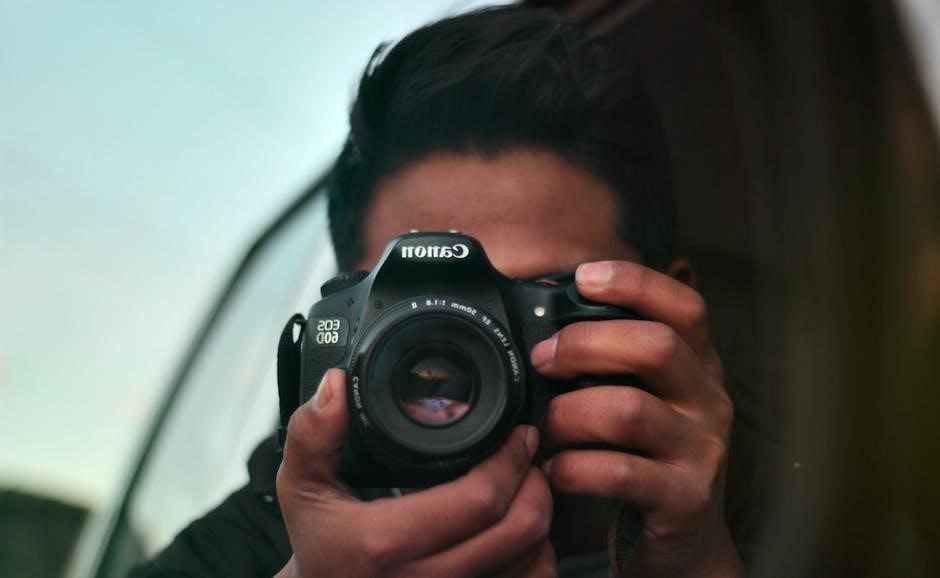
Choosing between RAW and JPEG significantly impacts image editing flexibility. The Canon 70D’s manual (PDF) details how RAW files capture all sensor data‚ offering maximum control during post-processing for adjustments like white balance and exposure.
JPEG files‚ conversely‚ are compressed and processed in-camera‚ resulting in smaller file sizes but limited editing potential. Select RAW for critical work‚ JPEG for convenience and quick sharing.
Image Size and Compression
The Canon 70D allows adjusting image size and compression levels‚ impacting file size and detail. Refer to the camera’s manual (PDF) for options ranging from large RAW files to smaller‚ highly compressed JPEGs.
Larger sizes preserve more detail‚ ideal for printing or extensive editing‚ while smaller sizes are suitable for web use or storage limitations. Compression affects file size; lower compression retains more quality.
Video Recording Capabilities
The Canon EOS 70D excels in video recording‚ offering various resolutions and frame rates. Consult the detailed manual (PDF) for specifics on Full HD recording options‚ including 1080p at 30/24/60fps.
Explore audio recording options‚ potentially utilizing an external microphone for enhanced sound quality. Understanding these settings ensures optimal video capture for diverse creative projects and professional applications.
Video Resolution and Frame Rates
The Canon EOS 70D supports Full HD video recording at 1920 x 1080 pixels. Refer to the user manual (PDF) for detailed frame rate options‚ including 30fps for standard video‚ 24fps for a cinematic look‚ and 60fps for smooth slow-motion effects.
Understanding these settings is crucial for achieving the desired video quality and creative style. Experiment with different frame rates to optimize your footage for various applications.
Audio Recording Options
The Canon EOS 70D features a built-in microphone for basic audio capture during video recording. However‚ for enhanced sound quality‚ an external microphone can be connected via the 3.5mm microphone input.
The user manual (PDF) details manual audio level adjustment options. Proper audio levels are essential for professional-sounding videos‚ preventing distortion or excessively quiet recordings. Explore these settings for optimal results.
Connectivity and Data Transfer
The Canon EOS 70D offers several connectivity options for transferring images and videos. A standard USB port allows direct connection to a computer for file transfer. Furthermore‚ the camera boasts built-in Wi-Fi functionality‚ enabling wireless image sharing and remote control via compatible devices.
Downloadable software and drivers (available as PDFs) facilitate seamless data transfer and integration with editing software. Refer to the manual for detailed instructions on utilizing these features.
Connecting to a Computer
To connect your Canon EOS 70D to a computer‚ use the provided USB cable. Ensure the camera is powered off before connecting. Once connected‚ power on the camera and select the appropriate USB connection mode via the camera’s menu.
Your computer should recognize the camera as a storage device‚ allowing you to transfer images and videos. Download and install the necessary drivers and software from Canon’s website for optimal functionality.
Wi-Fi Functionality
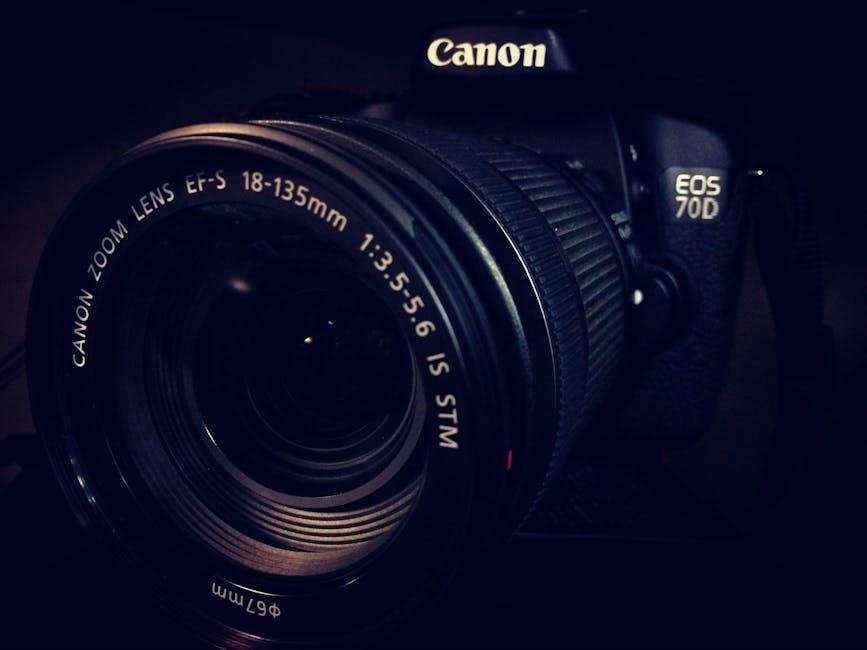
The Canon EOS 70D offers built-in Wi-Fi capabilities‚ enabling wireless image transfer and remote camera control. Access the Wi-Fi settings through the camera’s menu and select your network. Use the Canon Camera Connect app on your smartphone or tablet to establish a connection.
Once connected‚ you can easily transfer photos and videos‚ and even control camera settings remotely‚ enhancing your shooting experience.
Troubleshooting Common Issues
Encountering problems with your Canon EOS 70D? This section addresses frequent issues. Error messages often indicate specific problems; consult the manual for detailed solutions. Battery problems can stem from improper charging or an old battery – try a different‚ fully charged one.
If issues persist‚ ensure you have the latest firmware and drivers installed. Canon’s support website provides extensive troubleshooting resources.
Error Messages and Solutions
Decoding error messages on your Canon EOS 70D is crucial for quick fixes. The camera’s display provides codes; refer to the comprehensive manual for their meanings. Common errors include card errors (check card compatibility and formatting) and lens communication issues (ensure proper connection).
Restarting the camera often resolves minor glitches. Canon’s support website offers detailed explanations and solutions for specific error codes.
Battery Problems
Addressing battery issues on your Canon EOS 70D starts with ensuring the battery is correctly inserted and fully charged. If the camera doesn’t power on‚ try a different‚ known-good battery. Check the battery contacts for corrosion or debris‚ cleaning them gently if needed.
Extreme temperatures can affect battery performance. Consult the manual for recommended operating temperatures and proper battery storage guidelines to maximize lifespan.
Downloading Drivers and Software
Access essential drivers and software for your Canon EOS 70D through Canon Europe’s official support website. Download firmware updates to enhance camera functionality and address potential issues. These updates improve compatibility and performance.
Software packages often include Canon’s Digital Photo Professional for RAW image processing and EOS Utility for camera control and image transfer. Ensure compatibility with your operating system before installation.
Available Manuals (PDF Format)
Comprehensive PDF manuals for the Canon EOS 70D are readily available for download. Two versions exist: the EOS 70D (W) and EOS 70D (N) manuals‚ catering to regional variations. Adobe Reader 6.0 or later is required to view these files correctly.
These manuals‚ often distributed on a CD-ROM with the camera‚ provide detailed instructions‚ covering all aspects of operation. Download them for offline access and in-depth guidance;
EOS 70D (W) Manual
The EOS 70D (W) manual‚ available in PDF format‚ provides a detailed guide for users of this specific camera version. It’s a comprehensive resource covering everything from initial setup to advanced shooting techniques. Ensure you have Adobe Reader 6.0 or a later version installed to properly view the document.
This manual often comes on a CD-ROM included with the camera‚ offering offline access to all instructions and troubleshooting information.
EOS 70D (N) Manual
The EOS 70D (N) manual‚ delivered as a PDF file‚ is a crucial resource for owners of this Canon camera model. Notably‚ it is not always provided physically with the camera itself‚ but is accessible via a downloadable CD-ROM.
This disk contains detailed PDF manuals‚ including a comprehensive camera instruction guide‚ ensuring users have all the necessary information for optimal operation and troubleshooting.