

Article Plan: Bible Study Guide Books PDF
Explore comprehensive resources for insightful learning! Discover guides covering Galatians, Job, and Matthew, alongside methods like the “Sword” approach and topical studies.
Embarking on a journey through Scripture can be profoundly enriching, yet navigating its depths alone can feel daunting. Bible study guides serve as invaluable companions, offering structured frameworks to unlock the Bible’s wisdom and apply it to daily life. These resources aren’t meant to replace personal reading, but rather to enhance understanding and foster deeper engagement with the text.
From topical explorations to character analyses and book-by-book examinations, a diverse range of guides cater to various learning preferences. Whether you’re a seasoned theologian or a curious beginner, a well-chosen guide can illuminate complex passages and reveal hidden connections. Modern options often come as convenient PDF downloads, accessible on any device, making consistent study more achievable.
This guide will explore the landscape of Bible study resources, covering free and paid options, focusing on specific books like Matthew, and addressing common questions encountered along the way.
Why Use a Bible Study Guide?
Bible study guides offer a structured path to deeper understanding, moving beyond simple reading to active engagement with Scripture. They provide insightful questions and prompts, encouraging critical thinking and personal reflection. For those new to Bible study, guides offer a gentle introduction, demystifying complex concepts and providing historical context.
Even experienced students benefit from a fresh perspective, as guides can highlight nuances often overlooked. They facilitate application of biblical principles to everyday life, bridging the gap between ancient text and modern challenges. PDF formats offer portability and accessibility, allowing study anytime, anywhere.
Ultimately, guides empower individuals to move beyond passive consumption to a transformative relationship with God’s Word.
Popular Bible Study Guide Formats
Diverse formats cater to varied learning styles and interests. Topical studies explore themes like forgiveness or faith, drawing verses from across Scripture. Character studies delve into the lives of biblical figures – Job’s perseverance or David’s leadership – offering relatable lessons.
Book-by-book studies provide an in-depth examination of individual texts, like the Gospel of Matthew, uncovering historical context and literary nuances. Interactive guides incorporate questions, journaling prompts, and group discussion points.
Some guides utilize specific methods, such as the “Sword” method, focusing on observation, interpretation, and application. PDFs often combine these formats, offering a comprehensive and flexible learning experience.
Topical Studies
Topical Bible studies center around specific themes or concepts found throughout Scripture, rather than a sequential book-by-book approach. Common topics include faith, hope, love, forgiveness, prayer, and spiritual growth. These studies allow for a broader understanding of biblical teachings on a particular subject.
They often draw verses from various books, demonstrating the interconnectedness of God’s Word. PDF guides for topical studies frequently include cross-references, allowing readers to explore related passages. Interactive elements like reflection questions and application exercises enhance engagement.
This format is ideal for those seeking guidance on specific life challenges or desiring a deeper understanding of core Christian beliefs.
Character Studies
Character studies in Bible guides delve into the lives of biblical figures, examining their strengths, weaknesses, and relationship with God. Popular subjects include Abraham, Moses, David, Ruth, and Paul. These studies aim to extract timeless principles from their experiences.
PDF resources often provide detailed biographical information, contextual background, and analysis of key decisions made by the character. They encourage readers to identify with these figures, learning from their triumphs and failures. Interactive questions prompt self-reflection and application to personal life.
This approach fosters empathy and a deeper appreciation for the complexities of faith and human nature.
Book-by-Book Studies
Book-by-book studies offer an in-depth exploration of individual books within the Bible, providing comprehensive context and analysis. Popular choices include Genesis, Psalms, Isaiah, Romans, and Revelation. These guides typically follow the narrative flow of the book, verse by verse or section by section.
PDF resources often include introductions outlining the author, date, audience, and purpose of the book. Detailed commentary clarifies difficult passages and highlights key themes. Study questions encourage careful reading and critical thinking.
This method is ideal for those seeking a thorough understanding of a specific biblical text and its overall message.
The Importance of Choosing the Right Guide
Selecting the appropriate Bible study guide is crucial for a rewarding and accurate learning experience. Consider your theological background and learning style. Some guides lean towards specific denominations or interpretations, while others are more non-denominational.
Assess the guide’s scholarship and author credentials. Look for guides written by reputable theologians or biblical scholars. Ensure the guide aligns with your understanding of biblical interpretation and doesn’t promote biased or misleading information.
A well-chosen guide will enhance your understanding, deepen your faith, and avoid potential misinterpretations. Prioritize resources that encourage critical thinking and personal application.
Free Bible Study Guide PDFs Online

Numerous websites offer complimentary Bible study guides in PDF format, providing accessible resources for all. Explore options focusing on specific books like Galatians and Job, or delve into topical studies addressing faith and spiritual growth.
Many churches and ministries provide downloadable guides on their websites, often categorized by age group or study focus. These resources can be invaluable for individual or group study, offering structured lessons and insightful commentary.
Remember to evaluate the source’s credibility and theological stance before committing to a study. Utilize these free resources to embark on a deeper understanding of scripture.
Websites Offering Free Guides
Several online platforms consistently provide free Bible study materials in PDF format. GotQuestions.org offers topical studies and verse-by-verse analyses, while Bible Gateway hosts various downloadable guides alongside its translation tools.
Additionally, many denominational websites, such as those affiliated with Presbyterian, Methodist, and Baptist traditions, feature free studies tailored to their theological perspectives. Explore LifeWay for a selection of free samples and introductory guides.
Don’t overlook individual ministry websites; numerous pastors and teachers offer their studies freely as a resource for spiritual growth.
Specific Free Guides (Galatians, Job, etc.)
Numerous free PDF guides focus on specific biblical books. A readily available resource is a 6-day study on Galatians, centering on the theme of being “Born of God,” offering daily chapter-by-chapter exploration.
For those grappling with suffering, a comparative study guide examines the Book of Job alongside its cinematic adaptations, prompting reflection on faith and adversity. Guides dedicated to the Gospel of Matthew, like “The King of Kings,” are designed for youth and children, exploring Jesus’ life and teachings.
Further options include topical studies on prayer, specifically focusing on the Lord’s Prayer, and guides addressing common theological questions.
Paid Bible Study Guide PDFs: Benefits & Options
Investing in paid Bible study guides often unlocks deeper, more structured learning experiences. These resources frequently include detailed commentary, historical context, and insightful analysis not found in free materials.
Benefits extend to professionally designed layouts, interactive elements, and supplementary resources like videos or leader guides. Options range from individual book studies to comprehensive series covering entire biblical themes.
While specific titles vary, expect to find guides tailored to different learning styles and theological perspectives. Consider exploring options from reputable publishers known for scholarly accuracy and practical application, enhancing your understanding and spiritual growth.
Bible Study Guides Focused on Jesus (Gospel of Matthew)

The Gospel of Matthew, portraying Jesus as the promised Messiah, is a popular focus for Bible study. Guides dedicated to Matthew delve into His teachings, miracles, and ultimate sacrifice, revealing His divine identity.
Many resources, like “The King of Kings Bible Study Guide,” offer interactive journeys through the text, suitable for both individual and group study. These guides often explore key themes such as the Kingdom of Heaven and Jesus’ fulfillment of Old Testament prophecies.
Expect in-depth analysis of pivotal passages, prompting reflection on Jesus’ impact and relevance for contemporary life, fostering a deeper connection with Christ.
Understanding Different Bible Translations in Study Guides
Selecting a study guide aligned with your preferred Bible translation is crucial for accurate interpretation. Different translations prioritize varying aspects – literal accuracy versus readability.
The NASB (New American Standard Bible) is often favored for its commitment to literal translation, closely mirroring the original Hebrew and Greek texts. This makes it ideal for detailed, scholarly study.
However, other translations like the NIV or ESV offer a balance between accuracy and clarity, making them accessible for broader audiences. Consider the guide’s translation and your comfort level with its style to maximize comprehension and avoid misinterpretations.
NASB (New American Standard Bible) & Literal Translations
The NASB stands out as a highly respected literal translation, prioritizing word-for-word equivalence to the original biblical languages. This meticulous approach aims to minimize interpreter bias, presenting the text as closely as possible to its ancient form.
Other literal translations, such as the English Standard Version (ESV) and the New King James Version (NKJV), share this commitment to accuracy, though they may employ slightly different translation philosophies.
When using a study guide based on a literal translation, expect a more detailed and potentially challenging reading experience, requiring careful attention to nuance and context. It’s excellent for in-depth theological exploration.
Daily Bible Reading Plans (6-Month Plans)
Embark on a structured journey through Scripture with a 6-month Bible reading plan! These plans systematically guide you through the entire Bible, breaking down the text into manageable daily portions.

Many plans allocate specific chapters or passages each day, ensuring you cover both the Old and New Testaments over the designated timeframe. This fosters a comprehensive understanding of biblical narrative and themes.
PDF study guides often incorporate these plans, providing accompanying notes, reflections, or questions to enhance your reading experience. Consistency is key; dedicating even a short time daily yields significant spiritual growth.
Bible Study Methods Explained
Unlock deeper meaning with proven Bible study techniques! Several methods facilitate insightful exploration of Scripture, moving beyond simple reading to active engagement.
The “Sword” method utilizes four key questions – represented as the points of a sword – to dissect a passage: What does it teach about God? About humanity? About Christ? And how should we respond?
Another approach emphasizes Observation, Interpretation, and Application. First, carefully observe the text. Then, interpret its meaning within its historical and literary context. Finally, apply the principles to your life.
Effective study guides often incorporate these methods, providing prompts and exercises to guide your analysis.
The “Sword” Method (Four Questions)
The “Sword” method is a powerful tool for focused Bible study, visualizing analysis through four crucial questions, each representing a point on a sword’s blade.
Firstly, ask: “What does this passage reveal about God?” This focuses on understanding God’s character, attributes, and actions as portrayed in the text.
Secondly: “What does it reveal about humanity?” Explore insights into human nature, sin, and our relationship with God.
Thirdly: “What does it reveal about Jesus Christ?” Seek connections to Christ’s life, teachings, and redemptive work.
Finally: “How should I respond?” This prompts personal application, challenging you to live out the passage’s truths.
Observation, Interpretation, and Application
Effective Bible study hinges on a three-step process: observation, interpretation, and application. Begin with observation – carefully reading the text, noting details, and identifying key themes without imposing pre-conceived notions.
Interpretation follows, seeking to understand the author’s intended meaning within its historical and literary context. Utilize reliable study resources and consider different perspectives.
Finally, application bridges the gap between ancient text and modern life. Ask yourself: how does this passage challenge me? How can I integrate its principles into my daily decisions and relationships?
This methodical approach ensures a deeper, more meaningful engagement with Scripture.
Studying the Relationship Between the Old and New Testaments
Understanding the Bible as a unified story is crucial. The Old Testament lays the foundation, containing prophecies, covenants, and types that find fulfillment in the New Testament.
Explore how Old Testament laws and rituals foreshadow Jesus Christ and His sacrifice. Recognize recurring themes like redemption, covenant, and the kingdom of God, tracing their development across both testaments.
Study guides can illuminate these connections, revealing how Jesus fulfilled Messianic prophecies and established a new covenant. Examining parallel passages and historical context deepens comprehension.
This integrated approach unveils the Bible’s cohesive narrative, demonstrating God’s consistent plan of salvation throughout history.
Guides Focusing on Specific Prayers (The Lord’s Prayer)
Delve into the profound meaning of Jesus’ model prayer! Study guides dedicated to The Lord’s Prayer unpack each phrase, revealing its theological depth and practical application for daily life.
Explore the petitions for God’s glory, provision, forgiveness, and protection. Understand the significance of addressing God as “Our Father” and seeking His kingdom.
These guides often examine the prayer’s historical context and its relevance to discipleship. They encourage personal reflection and application, fostering a deeper prayer life.
Discover how this seemingly simple prayer encapsulates core Christian beliefs and provides a framework for authentic communication with God.
Addressing Common Questions in Bible Study
Navigate challenging theological topics with clarity! Many Bible study guides proactively address frequently asked questions, fostering deeper understanding and resolving potential confusion.
Commonly explored questions include the relationship between water baptism and the baptism of the Holy Spirit, clarifying their distinct roles and significance within the Christian faith.
Guides also tackle the crucial distinction between the Bible as the inspired Word of God and Jesus Christ as the ultimate revelation of God, emphasizing their complementary nature.
These resources provide thoughtful explanations and biblical support, helping readers reconcile apparent contradictions and strengthen their faith.
Baptism (Water vs. Holy Spirit)
Delve into the nuanced understanding of baptismal practices! Many study guides dedicate sections to differentiating between water baptism and baptism in the Holy Spirit, addressing a common point of theological discussion.

Resources explore why the Bible doesn’t explicitly record Jesus water-baptizing the twelve apostles, prompting examination of the symbolic and spiritual significance of each practice.
Guides clarify that water baptism often served as a public declaration of faith, while the Holy Spirit baptism signifies empowerment for service and a deeper relationship with God.
They emphasize that both are important, but distinct, aspects of the Christian journey, avoiding the pitfall of prioritizing one over the other without biblical context.
The Bible vs. Jesus Christ
Explore the crucial relationship between Scripture and the Son of God! Many Bible study guides address the common misconception of choosing between the Bible and Jesus Christ, clarifying their interconnectedness.
Resources emphasize that the Bible is, fundamentally, the Word of God, but its ultimate purpose is to lead us to Jesus, not to replace Him.

Guides highlight that Jesus is the living Word, the fulfillment of prophecy, and the ultimate revelation of God’s character and plan for humanity.
They caution against elevating the Bible to a level that obscures Jesus’ centrality, stressing that He is the lens through which all Scripture should be interpreted.
Finding Guides for Children and Youth
Discover age-appropriate resources to nurture young faith! Many Bible study guide books cater specifically to children and youth, making complex concepts accessible and engaging.
Look for guides utilizing interactive elements, colorful illustrations, and relatable stories to capture their attention and foster a love for Scripture.
“The King of Kings Bible Study Guide” is a notable example, offering a 5-week journey through the Gospel of Matthew, designed to help young learners explore Jesus’ identity and mission.
These resources often focus on foundational truths, character development, and practical application of biblical principles to everyday life, building a strong spiritual foundation.
Interactive Bible Study Guide Features
Enhance your learning experience with dynamic study tools! Modern Bible study guide books, particularly in PDF format, increasingly incorporate interactive features to deepen engagement.
These can include fillable answer spaces, allowing direct note-taking within the document, and integrated links to related scriptures or resources for further exploration.
Some guides offer quizzes or reflection prompts to test comprehension and encourage personal application of the material.
Digital formats also enable features like highlighting, bookmarking, and searchable text, making it easier to navigate and retain information.
Interactive elements transform passive reading into an active and immersive learning process, fostering a more profound understanding of God’s Word.
How to Effectively Use a PDF Bible Study Guide
Maximize your study time with strategic PDF usage! Begin by choosing a dedicated PDF reader with annotation capabilities – highlighting, underlining, and note-taking are crucial.
Create a consistent study schedule and dedicate a quiet space free from distractions. Thoroughly read the introductory material before diving into the lessons.
Actively engage with the questions and prompts, writing out your answers thoughtfully. Utilize the search function to quickly locate specific verses or topics.
Don’t hesitate to cross-reference with other translations or resources for deeper understanding. Regularly review past lessons to reinforce learning and application.
Embrace the flexibility of PDFs for study anytime, anywhere!
Resources for Deeper Study
Expand your biblical knowledge beyond the PDF! Explore online Bible commentaries like Matthew Henry’s or John Gill’s for detailed verse explanations.
Utilize Bible dictionaries (like Smith’s or Easton’s) to understand historical context and word meanings. Consider interlinear Bibles to examine the original Hebrew and Greek texts.
Access theological websites and journals for scholarly articles and diverse perspectives. Engage with study Bibles offering extensive notes and maps.
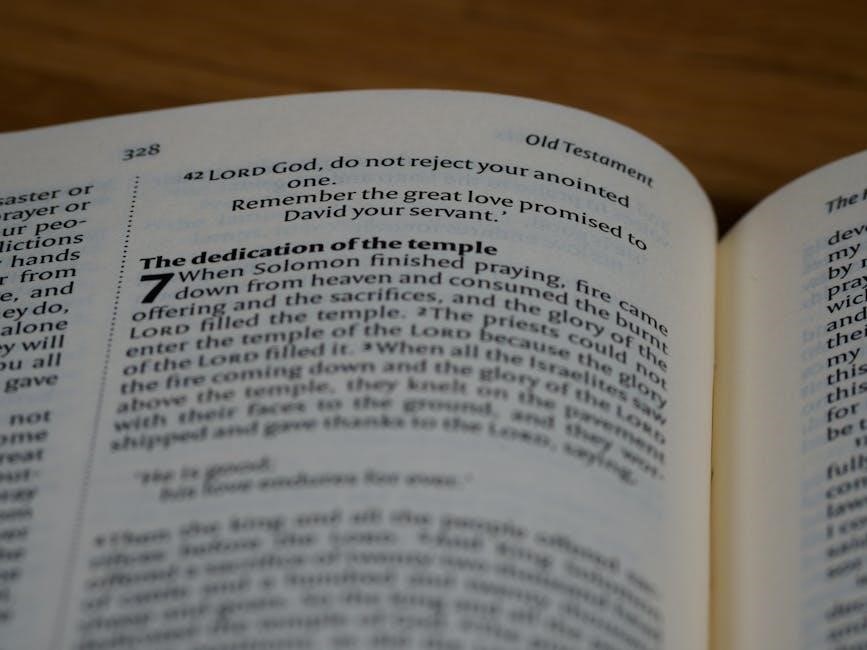
Join a Bible study group or seek mentorship from a pastor for collaborative learning. Remember, NASB is often favored for its literal accuracy.
Don’t forget the power of prayer for guidance and revelation!
Avoiding Misinterpretations in Bible Study
Context is key! Always consider the historical, cultural, and literary context of a passage. Avoid “proof-texting” – isolating verses without their surrounding text.
Recognize different genres (poetry, prophecy, narrative) and interpret accordingly. Be aware of your own biases and presuppositions. Compare different Bible translations, noting nuances.
Consult commentaries and scholarly resources, but critically evaluate their perspectives. Understand the relationship between the Old and New Testaments.

Don’t confuse the Bible with Jesus Christ; the Bible points to Him. Be cautious with interpretations regarding baptism (water vs. Holy Spirit).
Seek guidance from trusted pastors and mentors.
The Role of Pastors and Mentors
Experienced guidance is invaluable! Pastors and mentors offer wisdom gleaned from years of study and application. They can help navigate complex passages and avoid misinterpretations.

Seek their insights on challenging theological questions, like the nuances of baptism or the relationship between the Old and New Testaments. They provide accountability and encourage deeper engagement with scripture.
A mentor can help you develop sound Bible study methods, such as the “Sword” method or observation, interpretation, and application techniques.
They can also recommend appropriate Bible study guide books and resources tailored to your needs; Don’t hesitate to ask for clarification or alternative perspectives.
Their role is to equip you for effective and faithful Bible study.
Digital Bible Study Tools & PDF Readers
Enhance your study with technology! Numerous digital tools facilitate engaging with PDF Bible study guides. Popular PDF readers like Adobe Acrobat Reader allow highlighting, note-taking, and searching.
Consider Bible study apps offering integrated commentaries, dictionaries, and multiple translations. These often support PDF imports for streamlined access.
Online platforms provide interactive features, discussion forums, and collaborative study options. Explore options like YouVersion or Bible Gateway.
Digital tools enable easy access to resources, fostering deeper understanding and consistent study. Utilize features like text-to-speech for auditory learning.

Remember to choose tools that complement your learning style and enhance your engagement with the text.
Embarking on Your Bible Study Journey
Begin a transformative exploration of faith! Utilizing Bible study guide books, whether in PDF format or otherwise, unlocks deeper understanding and spiritual growth.
Remember to select guides aligned with your goals and preferred study style – topical, character-focused, or book-by-book.
Embrace consistent practice, employing methods like observation, interpretation, and application to connect scripture to daily life.
Don’t hesitate to leverage digital tools and seek guidance from pastors or mentors.
Your journey is personal and unique; approach it with an open heart and a willingness to learn. May your study deepen your relationship with God!