

PCL Rehab Exercises PDF: A Comprehensive Guide
PCL rehabilitation protocols, utilizing exercises, aim to restore knee function post-injury or surgery, focusing on range of motion and strength.
Understanding Posterior Cruciate Ligament (PCL) Injuries
PCL injuries, often occurring from direct trauma like a dashboard impact or hyperextension, represent a significant knee ligament challenge. Rehabilitation is crucial, whether pursuing non-operative management or post-surgical recovery. Understanding the injury’s severity – partial or complete tear, isolated or combined with other ligament damage – dictates the tailored rehab protocol.
Successful outcomes depend on factors like pre-injury health, rehab adherence, tissue quality, and injury severity. A comprehensive PDF guide to PCL rehab exercises will outline phased progression, starting with initial management (RICE) and advancing through strengthening and proprioceptive training. The goal is restoring stability and function, enabling a safe return to activity.
What is the Posterior Cruciate Ligament?
The Posterior Cruciate Ligament (PCL) is a key stabilizer within the knee joint, situated deep inside the knee. Unlike the more commonly injured ACL, the PCL resists excessive backward movement of the tibia (shinbone) relative to the femur (thighbone). It also provides rotational stability. A tear impacts knee biomechanics, potentially leading to instability and functional limitations.
Effective rehab, detailed in PCL rehab exercises PDF guides, focuses on restoring this stability. Understanding its anatomy and function is vital for successful recovery. Rehabilitation protocols emphasize strengthening surrounding muscles to compensate for ligament laxity and regaining proper movement patterns. A comprehensive approach is essential for optimal outcomes.
Causes of PCL Injuries
PCL injuries often result from high-energy trauma, such as direct blows to the front of the bent knee – common in car accidents or contact sports. However, they can also occur from hyperextension or twisting incidents. Unlike ACL tears, isolated PCL injuries are less frequent, often occurring with other ligament damage.
Understanding the injury mechanism informs the rehab approach outlined in PCL rehab exercises PDF resources. Rehabilitation protocols must address not only the PCL but also any associated injuries. Proper diagnosis is crucial for tailoring a specific exercise plan. Early intervention and adherence to a structured program are key to restoring knee stability and function.
Diagnosis of a PCL Injury
Accurate diagnosis of a PCL injury is paramount before initiating any rehab program detailed in a PCL rehab exercises PDF. This typically begins with a thorough physical examination, assessing knee stability with specific tests like the posterior drawer and sag sign. These tests check for abnormal backward movement of the tibia.
Imaging studies, including X-rays, are used to rule out fractures. Magnetic Resonance Imaging (MRI) provides detailed visualization of the ligament, confirming the tear and identifying any accompanying damage. A precise diagnosis guides the development of a tailored rehabilitation protocol, ensuring appropriate exercise selection and progression.
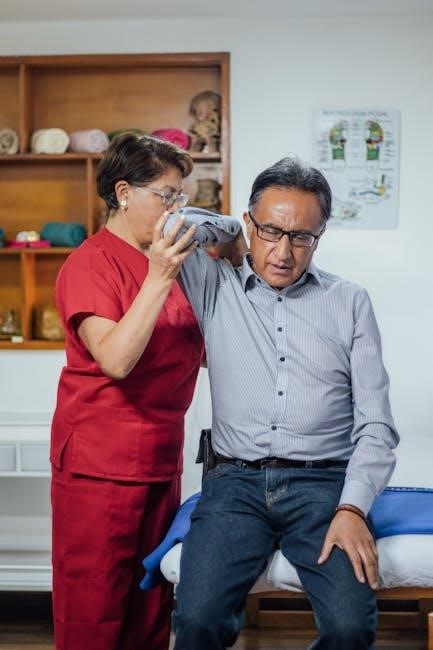
Non-Operative Treatment Options

Non-operative care, detailed in PCL rehab exercises PDFs, prioritizes reducing pain, swelling, and restoring knee function through conservative methods and targeted exercises.
Initial Management: RICE Protocol
RICE – Rest, Ice, Compression, and Elevation – forms the cornerstone of initial PCL injury management, as detailed in comprehensive rehab exercises PDFs. Immediate rest prevents further damage, while ice application (20 minutes at a time, several times daily) minimizes swelling and pain. Compression, using an elastic bandage, aids in reducing edema, and elevation above the heart promotes fluid drainage.
Adhering to the RICE protocol in the early stages is crucial for controlling inflammation and creating a foundation for subsequent rehabilitation. These initial steps, often outlined in PCL rehab guides, are vital before commencing specific exercises. Consistent application of RICE helps optimize healing and prepares the knee for progressive loading and strengthening.
Bracing and Immobilization
Bracing and controlled immobilization play a significant role in PCL rehab, as detailed in many exercises PDFs. Following injury or surgery, a hinged knee brace is often prescribed to protect the ligament and limit excessive motion. The brace’s range of motion is gradually adjusted by a clinician, allowing controlled flexion and extension.
The duration of bracing varies depending on injury severity and surgical intervention. Immobilization, particularly in the acute phase, minimizes stress on the healing ligament. Rehab protocols often incorporate brace weaning, progressively reducing reliance as strength and stability improve. Proper brace fitting and adherence to the prescribed wearing schedule are essential for optimal outcomes.
Early-Stage Rehabilitation Exercises (Phase 1)
Phase 1 of PCL rehab, outlined in comprehensive exercises PDFs, focuses on minimizing swelling, regaining initial range of motion, and activating key muscle groups. Exercises like heel slides gently improve knee flexion, while quad sets and hamstring sets initiate muscle engagement without stressing the ligament.
Straight leg raises enhance quadriceps control. Emphasis is placed on pain-free movement and avoiding activities that cause instability. This phase typically lasts several weeks, progressing based on individual tolerance and clinical assessment. Adherence to the protocol and consistent performance of these foundational exercises are crucial for setting the stage for more advanced rehab.
Range of Motion Exercises
PCL rehab PDF guides prioritize restoring knee flexion and extension through targeted range of motion (ROM) exercises. Heel slides are fundamental, gently gliding the heel towards the buttocks to increase flexion. Wall slides further assist in controlled bending.
Passive knee extension, utilizing gravity or a towel assist, combats stiffness. Active-assisted extension, using muscle effort with minimal support, builds strength. Maintaining pain-free movement is paramount; avoid forcing the knee beyond its comfortable limit. Consistent ROM exercises, as detailed in the protocol, are vital for preventing complications and preparing for strengthening phases.
Quadriceps Strengthening Exercises
PCL rehab PDF resources emphasize quadriceps strengthening to stabilize the knee joint. Early-stage exercises include isometric quadriceps sets – contracting the thigh muscles without movement – to activate the muscle. Straight leg raises, performed with the knee fully extended, further enhance strength.
Wall squats, initiated with a shallow bend and gradually increasing depth as tolerated, build endurance. As strength improves, short arc quads, focusing on the initial range of motion, become beneficial. Maintaining proper form and avoiding pain are crucial. The protocol guides progression, ensuring safe and effective strengthening, vital for functional recovery.
Hamstring Strengthening Exercises

PCL rehab PDF guides detail hamstring strengthening to counter anterior tibial translation and restore knee stability. Initial exercises involve hamstring sets, isometric contractions against resistance, activating the muscle without joint movement. Progressing to hamstring curls, using resistance bands or machines, builds concentric and eccentric strength.
Bridging exercises, engaging the hamstrings and glutes, enhance hip extension and overall lower limb control. Careful attention to form prevents compensatory movements. The protocol emphasizes controlled movements and gradual resistance increases. Strengthening the hamstrings is crucial for protecting the reconstructed PCL and achieving optimal functional outcomes, supporting knee joint integrity.
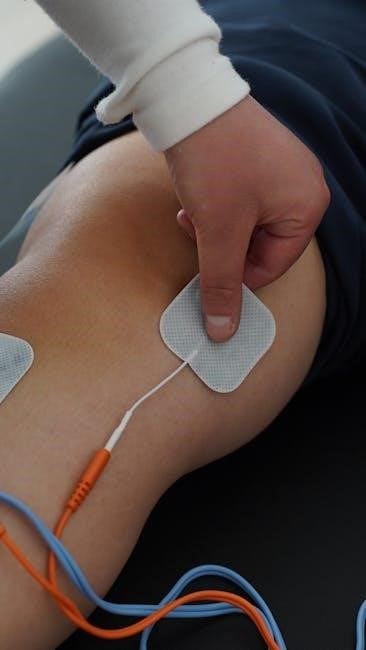
Post-Surgical Rehabilitation Protocol
Following PCL surgery, a phased rehabilitation protocol—outlined in PDF guides—progresses from early weight-bearing to advanced strengthening and return to activity.
Phase 2: Early Strengthening (Weeks 2-6)
During weeks two to six post-PCL surgery, the focus shifts towards early strengthening, guided by detailed rehabilitation protocols often available as PDFs. Weight-bearing progression is carefully managed, often starting with partial weight-bearing using crutches, gradually increasing as tolerated. Continued range of motion exercises remain crucial, aiming to regain full knee flexion and extension while wearing a brace, potentially unlocked around week two to allow bending to 90 degrees.
Closed kinetic chain exercises, like mini-squats and leg presses, are introduced to enhance muscle activation and stability; These exercises, detailed in PCL rehab PDFs, promote functional movement patterns. Monitoring pain and swelling is paramount, adjusting the intensity and progression based on individual response and tissue quality.
Weight-Bearing Progression
PCL rehabilitation PDFs outline a structured weight-bearing progression, crucial for optimal healing. Initially, patients typically use crutches with toe-touch weight-bearing, protecting the reconstructed ligament. Over weeks 2-6, progression occurs based on pain levels and clinical assessment. Partial weight-bearing is introduced, gradually increasing to full weight-bearing as quadriceps strength improves – ideally exceeding 80% of the non-injured leg.
The protocol emphasizes controlled loading, avoiding excessive stress on the healing PCL. Bracing often plays a role, providing support during the early phases. Detailed PDF guides specify timelines and criteria for advancing weight-bearing, ensuring a safe and effective recovery process, considering individual factors like injury severity and pre-injury health.
Continued Range of Motion Exercises
PCL rehab PDFs consistently emphasize continued range of motion (ROM) exercises throughout phases 2 and 3. These exercises, like heel slides and stationary cycling, combat stiffness and restore full knee flexion and extension. Early on, focus is on pain-free ROM, gradually increasing the stretch. The goal is to achieve at least 90 degrees of flexion by week 6, progressing towards full extension.
PDF guides detail specific ROM protocols, often incorporating gentle mobilization techniques. Maintaining ROM prevents complications and prepares the knee for strengthening. Consistent performance, guided by a physical therapist, is vital. Monitoring pain and avoiding forced movements are key, ensuring a safe and effective recovery, as outlined in comprehensive rehabilitation resources.
Closed Kinetic Chain Exercises
PCL rehab PDFs highlight closed kinetic chain (CKC) exercises as crucial for restoring functional stability. These exercises, like mini-squats, lunges, and leg presses, engage multiple muscle groups simultaneously, mimicking real-life movements. Starting with partial squats, gradually increase depth as strength improves. CKC exercises enhance neuromuscular control and proprioception, vital for preventing re-injury.
PDF guides emphasize proper form to avoid stressing the healing ligament. Weight-bearing progression is carefully controlled, guided by pain levels and therapist assessment. These exercises build strength and endurance, preparing the knee for advanced activities. Consistent adherence to the prescribed protocol, detailed in rehabilitation materials, is essential for optimal outcomes.
Phase 3: Intermediate Strengthening (Weeks 6-12)
PCL rehab PDFs detail Phase 3 as focusing on building strength and restoring proprioception. This phase introduces more challenging exercises, progressing from earlier stages. Proprioceptive training, utilizing wobble boards or balance discs, improves joint awareness and stability. Balance exercises, including single-leg stance, are incorporated to enhance neuromuscular control;
Advanced strengthening, like hamstring curls and leg presses with increased resistance, builds muscle power. Rehabilitation protocols emphasize controlled movements and proper form. Monitoring pain and swelling remains crucial. This phase bridges the gap between early and advanced strengthening, preparing the knee for higher-impact activities, as outlined in comprehensive PDF guides.
Proprioceptive Training
PCL rehab PDFs highlight proprioceptive training as vital for restoring knee joint awareness. These exercises challenge the body’s ability to sense its position in space, crucial after ligament injury. Utilizing wobble boards, balance discs, and foam pads, patients relearn coordinated movements. Single-leg stance, with eyes open and closed, improves stability and neuromuscular control.
Rehabilitation protocols often include perturbation training, where external forces disrupt balance, forcing the knee to react. This enhances dynamic stability. Progressing from stable to unstable surfaces is key. Consistent practice improves joint position sense, reducing re-injury risk, as detailed in comprehensive PDF guides.
Balance Exercises
PCL rehab PDF resources emphasize balance training as a cornerstone of recovery. These exercises progressively challenge stability, mimicking real-life movements. Initial stages involve static balance – holding a position on both legs, then progressing to single-leg stance. Dynamic balance is introduced with activities like tandem stance and reaching tasks.
Advanced protocols incorporate unstable surfaces (foam pads, wobble boards) and perturbations (gentle pushes) to enhance neuromuscular control. Rehabilitation guides often detail specific drills, like star excursion tests, to measure balance deficits. Consistent practice improves proprioception and reduces the risk of re-injury, restoring confidence and function.
Advanced Strengthening Exercises
PCL rehab PDF guides detail advanced strengthening to maximize knee and leg power. These exercises build upon earlier phases, focusing on functional movements. Lunges (forward, reverse, lateral) and step-ups challenge strength and stability. Single-leg squats are crucial for replicating daily activities.
Hamstring curls with increased resistance, and advanced quadriceps work like leg presses, are commonly prescribed. Protocols often include Nordic hamstring exercises for eccentric strength. Core strengthening remains vital for overall stability. The goal is to achieve symmetrical strength compared to the uninjured leg, preparing for return to sport or demanding activities.
Phase 4: Advanced Strengthening & Return to Activity (Weeks 12+)
PCL rehab PDF resources emphasize a return to activity guided by specific criteria. This phase incorporates agility drills – cone drills, shuttle runs – to improve quickness and coordination. Plyometric exercises, like jump squats and box jumps, enhance explosive power. Sport-specific training gradually reintroduces movements relevant to the individual’s activity.
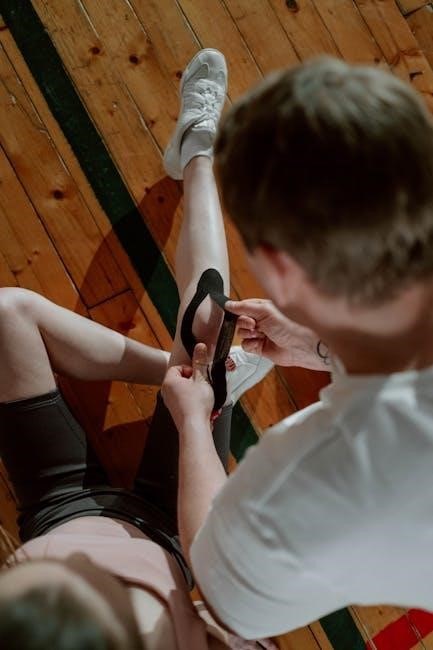
A successful return requires achieving full, pain-free range of motion, symmetrical strength, and passing functional tests. Running protocols are implemented, progressing from jogging to sprinting. The protocol stresses listening to the body and avoiding overexertion. Continued monitoring for swelling and pain is crucial throughout this final stage.
Agility Drills
PCL rehab PDF guides detail agility drills to restore dynamic stability and neuromuscular control. Cone drills, involving rapid changes in direction around cones, improve cutting and pivoting skills. Shuttle runs enhance acceleration, deceleration, and lateral movement. Figure-eight runs challenge coordination and agility. These drills are progressed systematically, starting with walking and advancing to jogging and running speeds.
Emphasis is placed on maintaining proper form and avoiding compensatory movements. The goal is to replicate the demands of the athlete’s sport or activity. Monitoring for pain or swelling is essential; drills should be modified or discontinued if symptoms arise. Proper warm-up and cool-down routines are vital components.
Plyometric Exercises
PCL rehab PDF resources incorporate plyometrics to enhance power, explosiveness, and reactive strength. Box jumps, starting with low boxes and gradually increasing height, improve vertical jump and leg power. Single-leg hops develop unilateral stability and power. Lateral hops challenge side-to-side movement and control. Depth jumps, a more advanced exercise, utilize the stretch-shortening cycle for maximal power output.
Proper technique is crucial to minimize stress on the PCL. Athletes should land softly, absorbing impact through the hips, knees, and ankles. Progression is based on strength, control, and pain levels. These exercises are typically introduced in the later stages of rehabilitation, after a solid strength base has been established.
Sport-Specific Training
PCL rehab PDF guides emphasize a return to sport through tailored training. This phase replicates movements demanded by the athlete’s specific activity. For runners, interval training and agility drills build endurance and speed. Cutting and pivoting drills, crucial for field sports, restore confidence and control. Jumping and landing drills prepare for impact forces.
Gradual exposure to game-like scenarios is vital. Controlled scrimmages or practice sessions allow athletes to test their knee in a competitive environment. Monitoring for pain, swelling, and functional limitations is essential. A successful return requires achieving full strength, agility, and proprioception, ensuring the PCL can withstand the demands of the sport.
Specific Exercises Included in PCL Rehab
PCL rehab PDF resources detail exercises like heel slides, hamstring curls, straight leg raises, wall squats, and calf raises for progressive recovery.
Heel Slides
Heel slides are a foundational exercise within a PCL rehab program, prominently featured in many PCL rehab PDF guides. This gentle movement focuses on restoring knee flexion, crucial after injury or surgery. To perform, lie on your back with legs extended. Slowly slide the heel of the injured leg towards your buttocks, bending the knee as far as comfortable without pain.
Maintain control throughout the movement, avoiding any jerking or bouncing. Then, slowly straighten the leg back to the starting position. This exercise improves range of motion and reduces stiffness. Repetitions and sets will be determined by your physical therapist based on your individual progress and tolerance. Consistent performance, as outlined in your rehab protocol, is key to optimal recovery.
Hamstring Curls
Hamstring curls are a vital component of PCL rehab, frequently detailed in PCL rehab PDF resources, targeting the muscles at the back of the thigh. These exercises strengthen the hamstrings, providing crucial support and stability to the knee joint. They can be performed using resistance bands, ankle weights, or specialized rehab equipment.
Begin by lying face down or standing, and slowly bend your knee, bringing your heel towards your buttocks. Maintain a controlled motion, resisting the urge to swing the leg. Slowly return to the starting position. Your physical therapist will guide you on appropriate resistance levels and repetitions, aligning with your rehab protocol. Proper form is essential to prevent re-injury and maximize effectiveness.
Straight Leg Raises
Straight leg raises are a foundational exercise within many PCL rehab PDF guides, crucial for early-stage recovery. This simple yet effective movement focuses on strengthening the quadriceps muscles, which play a key role in knee stability. Lie flat on your back with one leg bent and the other extended straight.
Tighten the quadriceps of the straight leg and slowly lift it approximately 6-12 inches off the ground. Hold for a few seconds, then slowly lower it back down. Avoid arching your back during the movement. Your rehab protocol will dictate the number of repetitions and sets. This exercise helps regain control and strength without placing excessive stress on the healing PCL.
Wall Squats
Wall squats, frequently detailed in PCL rehab PDFs, are a progressive exercise to build quadriceps and gluteal strength, vital for knee stability. Stand with your back flat against a wall, feet shoulder-width apart and slightly forward. Slowly slide down the wall, bending your knees to approximately 45-60 degrees – or as tolerated based on your rehab protocol.
Maintain a straight back and ensure your knees don’t extend past your toes. Hold this position for a few seconds, then slowly slide back up. Begin with shallow squats and gradually increase the depth as your strength improves. This controlled movement minimizes stress on the PCL while effectively strengthening supporting muscles.
Calf Raises
Calf raises, commonly included in PCL rehab PDF guides, strengthen the calf muscles, contributing to overall lower leg stability and proprioception. Begin by standing on a flat surface, or with the forefoot on a slightly elevated surface for increased range of motion. Slowly rise up onto your toes, lifting your heels off the ground as high as comfortably possible.
Hold this contracted position for a moment, focusing on engaging your calf muscles. Then, slowly lower your heels back down to the starting position. These can be performed bilaterally (both legs) or unilaterally (one leg at a time) to increase the challenge. Proper form is crucial to avoid compensation and maximize effectiveness.
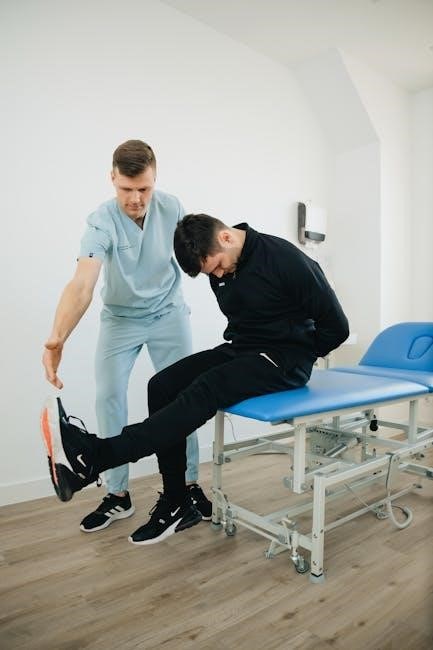
Important Considerations
PCL rehab success relies on monitoring pain, adhering to the protocol, and meeting return-to-sport criteria based on strength and stability.
Monitoring Pain and Swelling
PCL rehabilitation necessitates diligent monitoring of pain and swelling levels throughout each phase. Documenting these factors provides crucial feedback on exercise tolerance and protocol progression. A slight increase in discomfort post-exercise is often acceptable, but escalating or persistent pain signals a need for modification or regression.
Employ the RICE (Rest, Ice, Compression, Elevation) protocol proactively to manage swelling. Ice application for 15-20 minutes several times daily is beneficial, particularly after exercise sessions. Consistent monitoring allows for timely adjustments, preventing setbacks and optimizing recovery. Communicate any concerning symptoms to your physical therapist or surgeon promptly to ensure a safe and effective rehabilitation journey.
Rehabilitation Compliance
Successful PCL rehabilitation hinges on unwavering patient compliance with the prescribed exercise protocol. Consistent adherence to the program, even during periods of minimal discomfort, is paramount for optimal outcomes. Skipping sessions or modifying exercises without guidance can impede progress and potentially lead to re-injury.
Understanding the rationale behind each exercise fosters greater engagement and motivation. Open communication with your physical therapist is vital to address any challenges or concerns that may arise. A dedicated approach, coupled with realistic expectations, significantly enhances the likelihood of achieving a full return to pre-injury activity levels. Remember, rehabilitation is an active process requiring commitment and perseverance.
Return to Sport Criteria
Returning to sport following PCL rehabilitation requires meeting specific, objective criteria to minimize re-injury risk. These benchmarks extend beyond simply achieving pain-free range of motion and strength. Quadriceps and hamstring strength should exceed 85% of the uninjured leg, alongside demonstrated functional stability during agility testing.
Proprioceptive abilities, crucial for dynamic control, must be fully restored. A successful return necessitates passing a comprehensive functional hop test and exhibiting no signs of swelling or instability during sport-specific drills. Your surgeon and physical therapist will collaboratively assess these factors, ensuring a safe and gradual re-integration into athletic activity. Patience and adherence to these guidelines are essential.