

Sheehy’s Manual, published since 1979, is a cornerstone resource for emergency nurses, offering comprehensive guidance and evolving with modern practices․
Historical Context and Evolution
Sheehy’s Manual of Emergency Care first emerged in 1979, responding to a critical need for standardized emergency nursing education․ Initially conceived by Irene M․ Sheehy, RN, it quickly became a foundational text, reflecting the burgeoning field of emergency medicine․
Early editions focused on basic life support and trauma care, mirroring the priorities of the time․ Subsequent revisions incorporated advancements in cardiology, respiratory care, and pharmacology․ The manual’s evolution parallels the professionalization of emergency nursing, embracing concepts like triage, the ABCDE approach, and evidence-based practice․
Throughout its history, Sheehy’s has adapted to changing healthcare landscapes, integrating new technologies and protocols, solidifying its position as a vital resource for generations of emergency care providers․
Target Audience and Scope
Sheehy’s Manual of Emergency Care primarily targets registered nurses (RNs), paramedics, and other allied health professionals working in emergency departments and acute care settings․ It serves as a crucial resource for both novice and experienced practitioners seeking to enhance their skills and knowledge․
The scope of the manual is exceptionally broad, encompassing all aspects of emergency care – from initial assessment and triage to advanced interventions and pharmacological management․ It covers a wide spectrum of medical and traumatic emergencies, including cardiovascular, respiratory, neurological, and pediatric cases․
Furthermore, Sheehy’s extends beyond clinical procedures, addressing legal and ethical considerations essential for responsible emergency practice․

Core Principles of Emergency Care as Outlined in Sheehy’s
Sheehy’s Manual emphasizes rapid assessment, stabilization, and definitive care, prioritizing patient safety and utilizing a systematic, evidence-based approach․
Triage and Initial Assessment
Sheehy’s Manual details a robust triage system, crucial for prioritizing patients based on acuity and resource allocation․ This involves rapidly categorizing patients—emergent, urgent, or non-urgent—using standardized scales like the Emergency Severity Index (ESI)․
Initial assessment, as outlined, focuses on a quick, focused history and physical exam to identify immediate life threats․ Vital signs are paramount, alongside a brief neurological assessment and evaluation of airway, breathing, and circulation․
Effective communication and accurate documentation are stressed, ensuring a seamless handover to the treatment team․ The manual emphasizes the importance of continuous reassessment, as a patient’s condition can rapidly change, necessitating adjustments to the care plan․
The Primary Survey (ABCDE Approach)
Sheehy’s Manual champions the ABCDE approach for the primary survey – a systematic method to rapidly identify and treat life-threatening conditions․ ‘A’ stands for Airway, ensuring patency; ‘B’ for Breathing, assessing respiratory rate and effort; ‘C’ for Circulation, evaluating pulse, blood pressure, and perfusion․
‘D’ represents Disability, a neurological assessment using the AVPU scale (Alert, Verbal, Pain, Unresponsive), and ‘E’ for Exposure/Environment, fully exposing the patient while preventing hypothermia․
The manual stresses simultaneous assessment and intervention, with each step building upon the last․ Rapid identification and correction of critical issues are prioritized, forming the foundation of emergency care․
Secondary Survey and Detailed History
Sheehy’s Manual emphasizes that, following stabilization during the primary survey, a thorough secondary survey and detailed history are crucial․ This involves a complete head-to-toe assessment, seeking any additional injuries or clues to the patient’s condition․
A comprehensive history, utilizing the AMPLE mnemonic (Allergies, Medications, Past medical history, Last oral intake, Events leading to the illness/injury), is vital․

The manual highlights the importance of reassessing vital signs continuously and comparing them to baseline values․ This systematic approach ensures no significant findings are overlooked, contributing to accurate diagnosis and effective treatment planning․

Specific Emergency Situations Covered
Sheehy’s Manual details management of diverse emergencies, including cardiovascular and respiratory issues, trauma, and neurological events, providing practical guidance for clinicians․
Cardiovascular Emergencies
Sheehy’s Manual provides in-depth coverage of critical cardiovascular emergencies, equipping healthcare professionals with the knowledge to rapidly assess and intervene․ Detailed protocols for Myocardial Infarction Management are presented, emphasizing early recognition of symptoms, ECG interpretation, and appropriate pharmacological interventions like aspirin and nitroglycerin․
Furthermore, the manual outlines comprehensive Cardiac Arrest Protocols, adhering to current guidelines for CPR, defibrillation, and advanced cardiac life support (ACLS)․ Emphasis is placed on effective teamwork, airway management, and post-cardiac arrest care to optimize patient outcomes․ The resource also addresses dysrhythmias, heart failure, and hypertensive emergencies, offering practical strategies for stabilization and treatment․
Myocardial Infarction Management
Sheehy’s Manual details a systematic approach to Myocardial Infarction (MI) management, starting with rapid assessment of chest pain characteristics and risk factors․ The text stresses the importance of obtaining a 12-lead ECG within 10 minutes of arrival, focusing on ST-segment elevation as a key indicator․
Immediate interventions, including oxygen administration, aspirin, nitroglycerin, and morphine, are thoroughly discussed․ The manual also covers considerations for thrombolytic therapy versus percutaneous coronary intervention (PCI), emphasizing timely access to specialized care․ Post-MI care, including monitoring for complications and patient education, is also addressed․
Cardiac Arrest Protocols
Sheehy’s Manual provides detailed Cardiac Arrest protocols aligned with current American Heart Association guidelines․ It emphasizes the importance of immediate high-quality CPR, beginning with chest compressions, and early defibrillation when indicated․ The manual outlines algorithms for both shockable and non-shockable rhythms, including medication administration – epinephrine, amiodarone – and airway management;
Post-Cardiac Arrest Care is also extensively covered, focusing on targeted temperature management, hemodynamic support, and identifying reversible causes․ The text stresses the need for a systematic approach, team coordination, and continuous monitoring to optimize patient outcomes following resuscitation efforts․
Respiratory Emergencies
Sheehy’s Manual dedicates significant coverage to Respiratory Emergencies, recognizing their frequent presentation in emergency settings․ It details the assessment of respiratory distress, including vital signs, auscultation findings, and pulse oximetry․ Diagnostic tools like arterial blood gases are discussed to evaluate oxygenation and ventilation․
The manual provides comprehensive guidance on managing conditions like pneumonia, pulmonary embolism, and acute respiratory failure․ It emphasizes prompt oxygen administration, airway adjuncts, and potential need for assisted ventilation․ Furthermore, it covers specific interventions for exacerbations of chronic obstructive pulmonary disease (COPD) and other common respiratory illnesses․

Asthma Exacerbation Treatment
Sheehy’s Manual outlines a stepwise approach to Asthma Exacerbation Treatment, prioritizing rapid symptom relief and preventing further deterioration․ Initial management focuses on continuous oxygen therapy to maintain adequate saturation levels․ The manual details the administration of short-acting beta-agonists (SABAs), like albuterol, via nebulizer or metered-dose inhaler with a spacer․
Corticosteroids, both systemic and inhaled, are discussed for reducing airway inflammation․ The manual emphasizes continuous monitoring of the patient’s respiratory status, including peak expiratory flow rates․ It also addresses when to consider magnesium sulfate or ipratropium bromide as adjunct therapies, and criteria for potential intubation․
Pneumothorax Recognition and Intervention
Sheehy’s Manual provides detailed guidance on Pneumothorax Recognition and Intervention, differentiating between spontaneous, traumatic, and tension pneumothorax․ Early identification relies on clinical presentation – dyspnea, chest pain, decreased breath sounds – and confirmation via chest radiography․ The manual outlines needle decompression protocols for immediate management of tension pneumothorax, a life-threatening emergency․
For smaller pneumothoraces, observation with supplemental oxygen may be sufficient, while larger ones typically require chest tube placement․ Sheehy’s details proper chest tube insertion techniques, monitoring for complications like bleeding or infection, and assessing for re-expansion pulmonary edema․
Trauma Management
Sheehy’s Manual emphasizes a systematic approach to Trauma Management, prioritizing the ABCDEs – Airway, Breathing, Circulation, Disability (neurological status), and Exposure․ It details rapid assessment techniques for identifying life-threatening injuries, including hemorrhage control methods like direct pressure and tourniquet application․
The manual provides comprehensive guidance on spinal immobilization protocols, utilizing cervical collars and backboards to prevent further neurological damage․ Sheehy’s also covers the principles of damage control resuscitation, focusing on permissive hypotension and balanced transfusion strategies to optimize outcomes in severely injured patients․
Head Injury Assessment and Care
Sheehy’s Manual details a thorough neurological assessment for suspected head injuries, utilizing the Glasgow Coma Scale (GCS) to objectively quantify the level of consciousness․ It stresses the importance of frequent reassessment to detect subtle changes in neurological status, indicating potential deterioration․
The manual outlines protocols for managing increased intracranial pressure (ICP), including interventions like head elevation, hyperventilation, and osmotic therapy; Sheehy’s also emphasizes the need for careful monitoring of vital signs and oxygenation, alongside imaging modalities like CT scans to identify skull fractures and intracranial bleeding․
Fracture Immobilization Techniques
Sheehy’s Manual provides detailed guidance on fracture immobilization, emphasizing the principles of splinting to minimize movement and pain․ It covers various splinting materials and techniques, tailored to different fracture locations – including upper and lower extremities․ The manual stresses the importance of assessing neurovascular status before and after splint application․
Sheehy’s also details traction splinting for femur fractures, outlining proper application to stabilize the limb and reduce pain․ It highlights the need for continuous monitoring for complications like compartment syndrome, and emphasizes prompt orthopedic consultation for definitive fracture management․

Pharmacological Considerations in Emergency Care
Sheehy’s Manual details essential emergency medications, dosages, and administration routes, emphasizing safe and effective pharmacological interventions for critical patient conditions․
Commonly Used Emergency Medications
Sheehy’s Manual of Emergency Care provides detailed information regarding a wide array of crucial medications utilized in acute settings․ These encompass analgesics like morphine and fentanyl for pain management, antiarrhythmics such as amiodarone and lidocaine to stabilize cardiac rhythms, and bronchodilators like albuterol for respiratory distress․
Furthermore, the manual covers vasopressors—epinephrine and norepinephrine—essential in managing hypotension and shock states․ Antidotes, including naloxone for opioid overdoses and acetylcysteine for acetaminophen toxicity, are also thoroughly discussed․ Sheehy’s emphasizes understanding each drug’s mechanism of action, appropriate indications, potential adverse effects, and contraindications to ensure optimal patient outcomes during emergency situations․ Dosage guidelines and administration techniques are clearly outlined, supporting safe and effective pharmacological interventions․
Drug Administration Routes and Considerations
Sheehy’s Manual of Emergency Care meticulously details various drug administration routes, recognizing their impact on onset and efficacy․ Intravenous (IV) access remains paramount for rapid delivery, while intramuscular (IM) injections offer sustained release․ Subcutaneous routes are suitable for specific medications like epinephrine․
The manual stresses the importance of considering patient factors—age, weight, and underlying conditions—when selecting a route and dosage․ It also highlights considerations for altered mental status or airway compromise, potentially necessitating alternative routes like endotracheal administration․ Sheehy’s emphasizes careful monitoring for adverse reactions and appropriate documentation of all administered medications, ensuring patient safety and accountability․

Pediatric Emergency Care – Key Differences
Sheehy’s Manual underscores that pediatric emergencies demand unique considerations due to anatomical, physiological, and developmental variances in children․
Age-Specific Physiological Considerations
Sheehy’s Manual meticulously details how pediatric physiology differs significantly from adults, impacting emergency care․ Infants possess immature respiratory systems, increasing susceptibility to respiratory distress and necessitating vigilant airway management․ Their thermoregulation is also less efficient, leading to rapid hypothermia․
Children exhibit higher metabolic rates and fluid requirements, demanding precise fluid resuscitation calculations․ Cardiovascular responses to shock also vary; children can compensate longer but decompensate rapidly․ Neurological maturity influences assessment; a Glasgow Coma Scale adapted for age is crucial․
Furthermore, Sheehy’s emphasizes understanding developmental stages to effectively communicate with and assess pediatric patients, tailoring interventions to their cognitive and emotional capabilities․
Pediatric Dosage Calculations
Sheehy’s Manual underscores the critical importance of accurate medication dosing in pediatric emergencies, highlighting that weight-based calculations are paramount․ Unlike adult dosing, simply adjusting for size is insufficient; precise weight in kilograms is essential․ The manual provides clear guidance on utilizing various formulas, including those for epinephrine, fluids, and other commonly used emergency medications․
Sheehy’s stresses the dangers of underdosing or overdosing, emphasizing the potential for severe adverse effects in children․ It advocates for double-checking all calculations and utilizing pediatric-specific drug references․
Furthermore, the manual details considerations for different routes of administration and the impact of physiological factors on drug distribution and metabolism in the pediatric population․

Legal and Ethical Aspects of Emergency Care
Sheehy’s Manual emphasizes informed consent, patient rights, and meticulous documentation as crucial legal and ethical components of emergency care practice․
Informed Consent and Patient Rights
Sheehy’s Manual of Emergency Care meticulously details the importance of obtaining informed consent whenever possible, even amidst critical situations․ It highlights that patients retain the right to refuse treatment, and healthcare providers must respect those decisions, documenting them thoroughly․
The manual stresses the necessity of communicating risks, benefits, and alternatives of proposed treatments in a manner understandable to the patient․ Exceptions to full consent, such as implied consent in life-threatening emergencies, are clearly outlined․
Furthermore, Sheehy’s underscores patient rights to confidentiality, privacy, and non-discrimination, emphasizing the ethical and legal obligations of emergency care teams to uphold these principles consistently․ Advocating for patient autonomy is a central theme․
Documentation and Record Keeping
Sheehy’s Manual of Emergency Care places paramount importance on accurate, comprehensive, and timely documentation․ It emphasizes that records serve as legal documents, crucial for continuity of care, and potential medico-legal defense․ The manual details specific elements to include in patient records – from initial triage notes and assessment findings to interventions performed and patient responses․
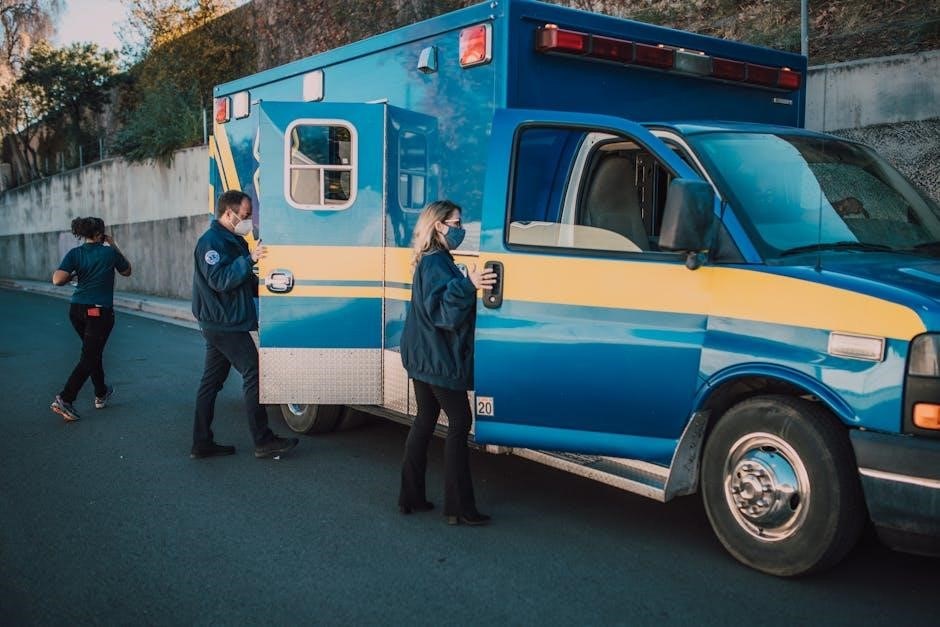
Sheehy’s stresses the need for objective charting, avoiding subjective interpretations․ It advocates for clear, concise language and the prompt documentation of all significant events, including refusals of care and communication with family members․
Proper record-keeping, as outlined, supports effective communication among healthcare professionals and ensures accountability within the emergency department setting․